Poncho

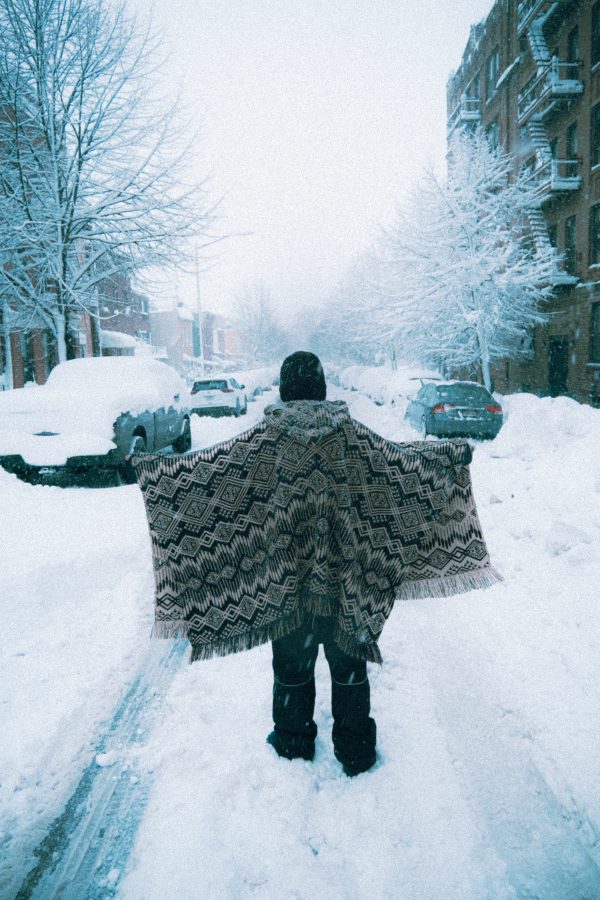
The object I picked of this story is named the poncho. The poncho is prominent in the countries
that reside in the Andes mountains; like from Venezuela all the way to the bottom tip of southern
America which is Argentina. In each country there are different renditions of it with some
prioritizing patterns and or colors etc. The main use of these garments is to protect oneself
against the harsh winds and cold weather of the regions near the Andes Mountains range, dating
back to B.C.E times were indigenous people lived across the large stretch of mountains. My
family and I each got our own ponchos, but I tend to be the one to use it the most. The poncho I
got in Chile, even though I am Ecuadorian marks an important part of my life. Before going to
Chile, I was at a low point of my life, and when my uncle told, me lets go meet some of my
family over there, I instantly said yes. Those 10 days were life changing; I never seen so many
different biomes and animals. My favorite thing to do over there was just staring towards at the
mountain through the car window, cramped in the car with my family. Although the poncho
signifies a changing point in my life, it also signifies my ancestral and family roots. As the only
out of my extended family to be born outside of Ecuador, I always felt like an outsider to my
culture and family, however when I put into my poncho, which is almost daily, I feel more
connected. A nice idea I thought of was the same way ponchos span across the many countries
that contain the Andes Mountains. No matter if we are in Ecuador, Chile, Colombia, and United
States whenever we put our ponchos we’re all connected as a family and to our roots.

The Sil-Baata

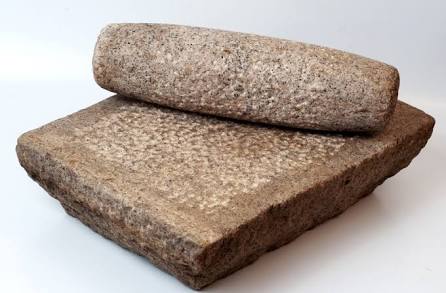
An artifact that highlights the culture of Bangladesh is the sil-batta [sheel baata]. This South Asian tool dates back to 2500 BCE during the Indus Valley Civilization. The tool consists of two parts: the rough stone slab and the stone cylindrical grinder. Used in various South Asian countries including, Bangladesh, India, and more, the sil-batta was used to grind a multitude of spices including chillies, turmeric, ginger, garlic as well as lentils. Often used while sitting on the ground, the tool required great strength to grind the various spices by rolling the cylindrical piece against the spices laid on the slab in an upward motion. The concept of this tool highlights and exemplifies the hard work, patience, and grit carried out by South Asians from many centuries ago to now. Not only is it resourceful but also scientific because manually breaking down these spices releases greater flavor due to a proper breakdown of the cells of the spices, adding to the uniqueness and special flavor of South Asian cuisine.
From my experience, I do not use this tool with my cooking, especially since it is not as prominently used anymore, even in Bangladesh. However, growing up, when I went back home, I observed many of the house-helpers using the sil-batta to grind spices which encouraged me to try out the tool when I was young, though I was not very successful at it. I found this tool very interesting and personally unique to our culture though similar techniques are also applied in other cultures. Currently, for these spices, my family and I usually use a blender/grinder to grind ginger and garlic into pastes. A lot of the spices that we use, however, are generally store bought packs that come grinded. Though, if we have time to grind the spices ourselves, we do buy the spices from the store and grind it at home.
Overall, the sil-batta and its connection to the spices it is used to prepare highlights a significant distinction in South Asian cultures to the rest of the world and reflects the novelty of South Asian foods. This tool plays a role as one of the roots that connects me back to home.

Proudly powered by WordPress | Theme: Baskerville 2 by Anders Noren.

Up ↑