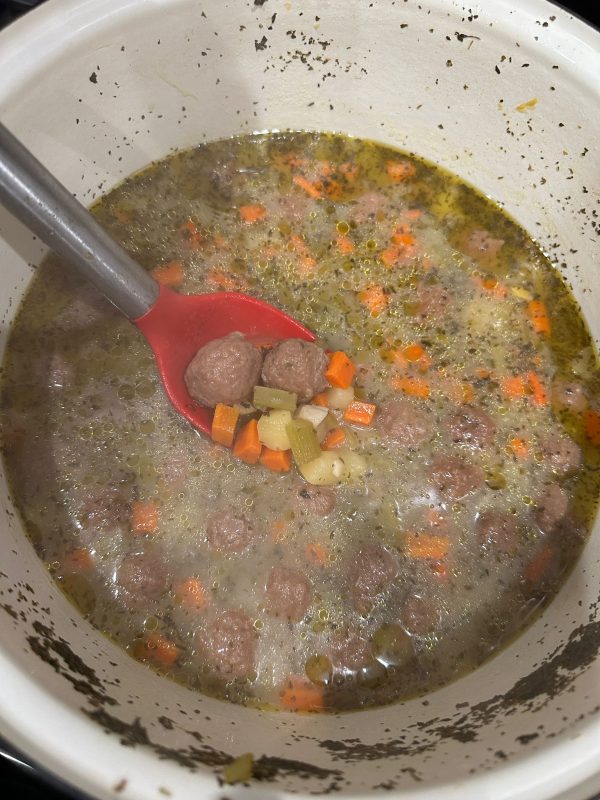
Kibbe Hamdah, also known as Hamid has been a staple dish on my dinner table almost every Friday night for as long as I can remember. It is a Syrian-Jewish dish that my grandma taught my mom to make. The base of the dish is a lemony soup with chopped carrots and celery. Inside the soup there are meatballs stuffed with another type of meat inside. It is often served with white rice. This dish is a staple in almost everyone’s home in my Syrian-Jewish community, and some people even add potatoes or tomato sauce to their soup. It is customary to eat Kibbe Hamdah on the Jewish Sabbath, which begins on Friday, 18 minutes after sunset. Kibbe Hamdah is not just a type of food, it also represents culture and religion. The traditional recipes in my community are very sacred, and they represent who we are. Eating Kibbe Hamdah with my family every week helps me recognize how far my community has come, and appreciate our rich history and culture. When I’m cooking for my family in the future, I know that Kibbe Hamdah will be a weekly staple in my house as well. My mother will pass down the recipe to me, and I will carry out the traditions of my community with pride and excitement. It is very special that even with everyone’s unique recipes, you will almost always find Kibbe Hamdah on their dinner table for the Jewish Sabbath and holidays.
Uzbek Chapan
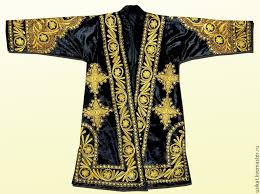
My object is a traditional Uzbek Chapan that has been in my family for almost one hundred
years. A Chapan looks like a long robe and people wear it as a top layer for warmth and
protection. It is made from cotton and covered with colorful patterns and detailed stitching. In
older Central Asian society, a man’s Chapan showed status. The more colorful and intricate it
looked, the more wealth and respect his family held. Today, people still wear chapans during
ceremonies and important celebrations. Wearing one during these events shows respect for
tradition and for family heritage.
I first learned about chapans during my first trip to Uzbekistan when I was twelve years old. After
returning home, I learned that my own family had one passed down through generations. The
men in my family wore it, most recently my grandfather and now it will pass down to me.
This Chapan matters to me because it connects me with my family’s past. Its patterns and
colors reflect the life my family lived in the old world before coming to America. When I look at it,
I think about my grandfather and the generations before him and learning about it helped me
feel more connected to my family history.
This object also tells a larger story. A Chapan shows family history and cultural identity in
Central Asian culture. Clothing like this represents respect, heritage, and social status. Objects
like this pass traditions from one generation to the next and keep family stories alive. My
Chapan also represents immigrant heritage in the United States and it shows how families keep
their traditions after moving across the world. Chapans have existed for centuries in Uzbekistan
and across Central Asia, connecting modern families to older societies and traditions.
“Habichuela con Dulce”
Have you ever eaten a dish that reminds you of your childhood? For me, it would be eating habichuela con dulce, a sweet bean dessert that reminds me of my ethnicity. It isn’t just a dish to eat; it represents the history, culture, and the strength it took to make it with a variety of infused cultures. This dish, originally from the Dominican Republic, is a part of who I am as a person. When I was younger, my mother always made habichuela con dulce during a specific time, which was Holy Week. The tradition that was introduced to me was that this dish had to specifically be eaten on Good Friday to give thanks for Jesus Christ sacrificing himself for us and also to bring blessings to the house. At first, I never believed in that tradition, but as I got older, I started to realize the true significance of this dish and also the happiness that it brings around. The specific recipe that my mom uses was passed down through generations, where she was taught by my great-grandmother. Every time this dish is made, it brings me great comfort because of the smell that enters my house, as well as joy because of the flavor. This dish often gathers my family, no matter what may be going on in their lives, because it’s tradition to eat together during Easter. It is a time to relax and enjoy the gift of life that is given to us.
The Dao – An Exploration of Bangladeshi Culture and the Immigrant Experience – Tajrian Jahan
An icon of the Bengali kitchen, the dao, a sharp, machete-sized seated blade commonly used by rural housewives to cut vegetables and fish, is an important symbol of Bengali village culture and a part of Bangladesh that my parents did not leave behind when they arrived here some 20 years ago.
The dao is a long, curved iron blade seated on a flat plank of wood or short iron tripod, used by squatting behind it and driving meat or vegetables into the blade. Its use dates back nearly 1,300 years to the Pala Dynasty in Bengal, a Buddhist kingdom in which early Bengali culture emerged; since the dawn of Bengali culture, the dao has been associated with the woman’s role as the nourisher and sustainer of the household.
The dao is also evidence of the sacredness of the bare earth in early Bengali culture. Toiling behind a dao, sharing a meal, and sleeping were all practices performed on the ground because the Earth and its soil were sacred. With the arrival of British colonialists, furniture and stovetops began to gain popularity and we lifted ourselves off these sacred grounds; using a dao became a symbol of rural meekness against Western culture. My mother came from a riverside village in Sylhet, and I remember watching her cut the same hyacinth beans she had once watched her own mother cut; she embodied the motherly spirit of the dao, and brought the essence of Bangladesh to our small apartment in the Bronx.
The Power of Rice
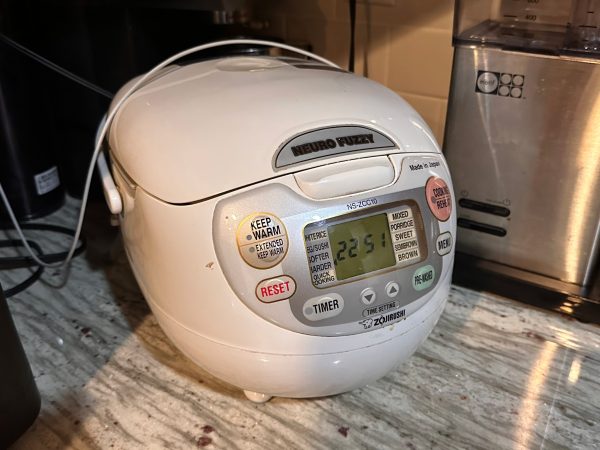
Anyone who lives in an asian household probably uses this every day. My family as well. For almost every meal, we have white rice. Eating rice with miso soup on the side is an essential everyday part of Japanese food culture, and I believe it is important to stay connected to it even when I am not in Japan.
The versatility of rice is what makes it special. Of course, you can eat it directly, but there are many other dishes you can make from rice itself. For example, you can shape the rice into a ball and put ingredients of your preference inside, called onigiri (おにぎり). You can season it with furikake (ふりかけ) or pour Japanese curry over it and enjoy it as curry rice.
The most important time of year for making rice dishes is the New Year. The rice is hammered together until it becomes one big blob, which we all know as mochi (もち). You can enjoy the plain mochi’s stickiness, or, for those who want some flavor, you can add soy sauce or sugar. The mochi is also used in soups called o’zoni (おぞうに) and oshiruko (おしるこ), both of which are traditional New Year’s dishes. The food Japanese people eat on New Year’s is different from the food they eat daily. My family sets up an entire feast, and instead of eating white rice, we eat mochi and other traditional New Year’s delights.
Double-headed Eagle
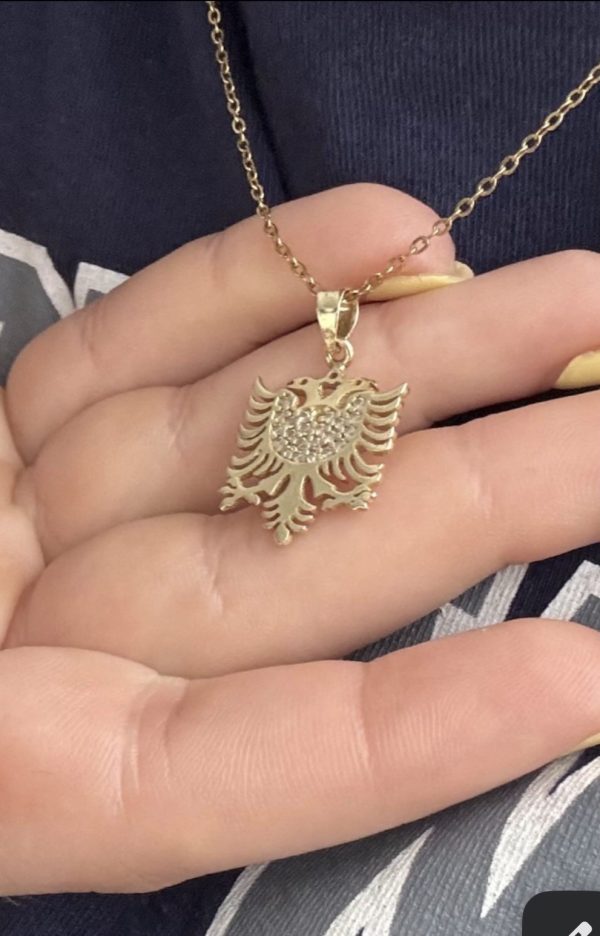
A single piece of jewelry bears the weight of identity, family sacrifice, and cultural survival across generations. My pendant is a small gold necklace featuring a gold double-headed eagle. Two heads are facing outward on a single body, mirroring the Albanian flag. As a first-generation Albanian-American, I did not grasp its significance until my mother gave it to me during my sophomore year of high school, a time when I was searching for who I was and where I came from. The two heads represent the unity of Albania’s two groups, the Gheg and the Tosk, and the nation’s position between the East and West. Under communism, the government forbade citizens from expressing national identity, yet the eagle was worn close to the heart, because identity cannot be legislated away.
My own parents were among the Albanians who left after communism fell. My father served in the military before boarding a boat to New York, where he rebuilt his life working in factories and pizza shops. My mother followed family members by plane, carrying Albania with her while forging something new in America. Together they labored to provide for my siblings and I. This necklace ties me to a country I did not experience firsthand, while enabling me to carry Albania’s history and my family’s story into my own American life. I now use this as a reminder to keep on working hard (just like my parents did) at the things that I want in life.
Symbol of Sikhism
The object I chose is my kada, the bracelet I wear on my wrist every day. It might look simple, just a plain silver circle, but it means a lot to me because it represents my religion, Sikhism.
I’ve actually worn it my whole life. Since I was born, I always had one on, and every time I grew out of it, I would get a new one. It’s something I’ve never taken off, literally never. Because of that, it feels like a part of me, not just something I wear.
As I got older, I started to understand its meaning more. It reminds me to stay strong, make good decisions, and stay connected to my values. Even in normal moments, I notice it, and it kind of keeps me grounded. Overall, my kada isn’t just a bracelet; it’s something that’s always been with me and always reminds me of who I am.
Friday Night Candlesticks
These are my great grandmother’s candlesticks that my family uses every Friday night to bring in the Sabbath. These candlesticks are important to me because they represent my Jewish religion and identity. In Judaism, lighting candles every Friday night starts the Sabbath, a time to pray, relax, and spend time with family. Every week when we light them, it feels like we are continuing something that has been done for generations.
What makes these candlesticks even more meaningful is my grandmother’s story after she received them from her mother. She immigrated from Iran to Israel due to religious persecution, which was a huge change in her life. Even when she was forced to leave her home, she kept her traditions, and these candlesticks are a symbol of that. When she gave them to my mom, her eldest daughter, she was passing down her religion, culture, and personal history.
Now, my family uses the same candlesticks and it makes me feel connected to where I came from. It’s like a reminder of my grandmother and everything she went through. It also shows how important religion is in shaping identity, especially in Jewish families where traditions are such a big part of life.
These candlesticks aren’t just an object, they represent my family’s past, our beliefs, and how we stay connected to our roots. They also remind me that even as life changes, our traditions and identity can stay strong and continue to guide us every day.