Fruit Blender

The object I chose is a fruit blender that sits on the kitchen counter in my house. Every morning,
my mom uses it to make smoothies for our entire family before we start the day. The blender
itself is nothing special, it’s just a plastic pitcher attached to a VERY loud motor. I am convinced
she uses it to wake us all up in the morning as well. My mom fills it with frozen berries, bananas,
yogurt, and sometimes honey and blends everything together into a thick drink that we can
enjoy. My grandmother always tells us that it gets the bowels moving in the morning.
When my parents were growing up in Hungary, one of the dishes they often ate during the
summer was something called gyümölcsleves, which directly translates to “fruit soup.” It is a
chilled soup made from fruits like cherries, berries, or peaches, usually mixed with cream or
yogurt and served cold. It is super refreshing and made with ingredients that are easy to find
locally.
When my family immigrated, their routines changed. The fruit soup had to be substituted by
smoothies made in a blender because it was quicker and easier for mornings before work and
school. Even though the dish changed form, the idea stayed the same. The blender always
reminds me how traditions from one place can adapt to life in another while still preserving
where a family comes from.

The Infinite Spiral Cord Between Each Other: The Landline Phone

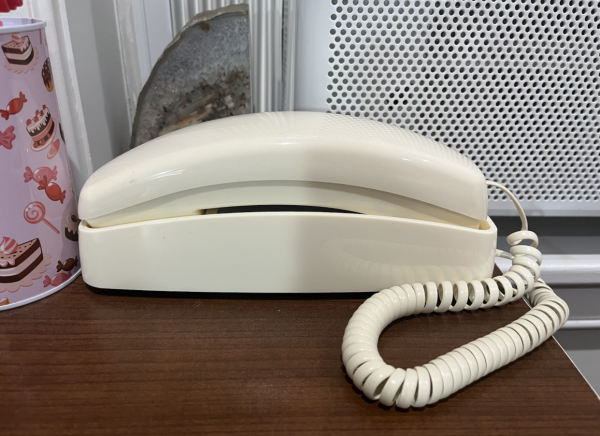
Despite the 3,000 mile distance between Ecuador and New York, my family managed to maintain connection through conversations over the landline phone. This particular phone is not something from my family. Instead, I bought it as a reminiscent artifact. Whether it was on the side table of my great-grandmother’s living room in Portoviejo or the travel agency in Kew Gardens where my mother would make international calls, the landline phone has been a significant part of my early life that I continue to honor and cherish. Its presence in our family was key in making sure we never forgot each other’s voices.

This means of communication began with my grandmother’s immigration to New York in the 1960s. My abuela Josefina came to New York decades ago and eventually brought her children, fostering the beginning of a new life for her family. However, the landline phone was not the main source of communication; the quality was poor and the price was expensive. This may have been especially difficult for Josefina, a new immigrant, as it could have been unreachable to make such calls without access to a landline phone at her place of residence. But with each occasional call, the long process ended. Josefina could finally hear the sounds of home.

Hearing the ring of the phone, I reflect on that same ring echoing through the past apartments of my grandmother, my aunts, and my parents as new residents of the bustling city. ¡Qué dulce!

Kibbe Hamdah

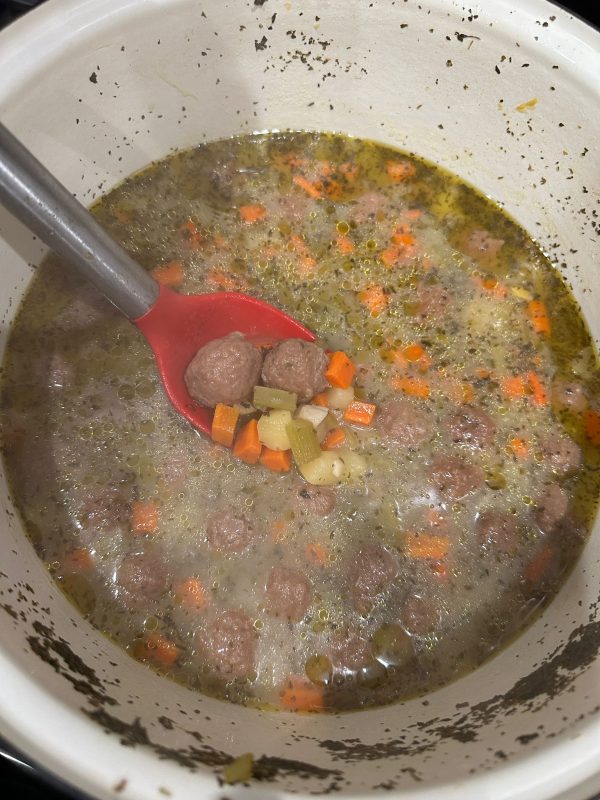
Kibbe Hamdah, also known as Hamid has been a staple dish on my dinner table almost every Friday night for as long as I can remember. It is a Syrian-Jewish dish that my grandma taught my mom to make. The base of the dish is a lemony soup with chopped carrots and celery. Inside the soup there are meatballs stuffed with another type of meat inside. It is often served with white rice. This dish is a staple in almost everyone’s home in my Syrian-Jewish community, and some people even add potatoes or tomato sauce to their soup. It is customary to eat Kibbe Hamdah on the Jewish Sabbath, which begins on Friday, 18 minutes after sunset. Kibbe Hamdah is not just a type of food, it also represents culture and religion. The traditional recipes in my community are very sacred, and they represent who we are. Eating Kibbe Hamdah with my family every week helps me recognize how far my community has come, and appreciate our rich history and culture. When I’m cooking for my family in the future, I know that Kibbe Hamdah will be a weekly staple in my house as well. My mother will pass down the recipe to me, and I will carry out the traditions of my community with pride and excitement. It is very special that even with everyone’s unique recipes, you will almost always find Kibbe Hamdah on their dinner table for the Jewish Sabbath and holidays.

The Cross That Traveled With Us

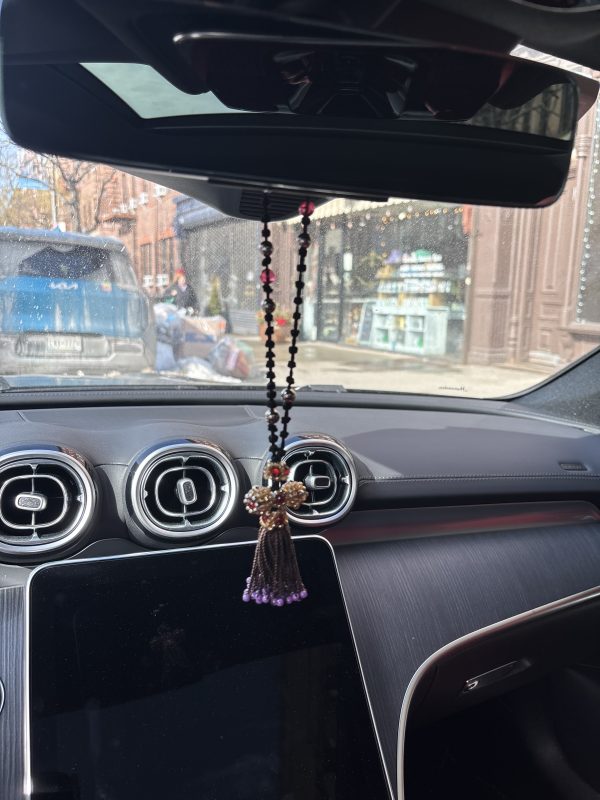
When my mom left Lithuania to start a new life in New York City, she didn’t bring many belongings with her. But she did bring one small object: a beaded cross that now hangs from the rearview mirror in our family’s car. To anyone else, it might look like a simple decoration, but to us it represents protection, memory, and the feeling of being watched over.
My mom grew up surrounded by Catholic and Orthodox traditions, and this cross was something familiar she could hold onto when everything else felt uncertain. When she first arrived in New York, she didn’t know the language, the streets, or the people. Hanging the cross in her car became a quiet ritual that made her feel safer. Over time, it became part of our family’s daily life. Every time we drive, it swings gently with the movement of the car, reminding us of where we come from and the journey that brought us here.
As I’ve gotten older, I’ve realized how much meaning is wrapped up in this small object. It carries my mom’s courage, her faith, and the hope she had when she left home. It also connects me to a larger story shared by many immigrant families who bring pieces of their past with them to feel grounded in a new place. This cross is more than an ornament, it is a symbol of protection, heritage, and the path my family took to build a life in America.

Celebrating Christmas at Home and Across the Country

My family has always valued celebrating the holidays together. Every Christmas Eve, my whole family, including my cousins, aunts, uncles, in-laws, and even plus ones, come together and have a big dinner followed by dessert and games and presents. Every year, a different family hosts. It rotates between my house and my two aunt’s houses. We start from dinnertime till late after midnight. Everyone spends the day cooking, baking, or working, then we all hangout together at night. By the end of the night, people are dropping like flies and falling asleep on any couch in sight. This tradition may have only started a few years ago, but it has quickly become something I look forward to every year. It’s a way for everyone to come together and create special memories during the holidays, which can be when you need company the most.

Not only am I lucky enough to spend Christmas with my family in the United States, but I also get to spend it with my family in the Philippines. My parents immigrated from the Philippines when they were young, and slowly all my father’s side came to America too, but minus my mother, her family is all still in the Philippines. Shortly before we started this holiday tradition, one of my family members sent us a traditional, star-shaped Filipino Christmas lantern called a parol. The lantern symbolizes hope, faith, and the triumph of light. Ever since we received this gift, we put it up in the windows, turn it on, and let it light up the house. Having this lantern makes it feel like my family in the Philippines is celebrating with us. Whether it’s in my house or from across the country, I will always feel my whole family’s love during the holidays.

– HC

Family Necklace

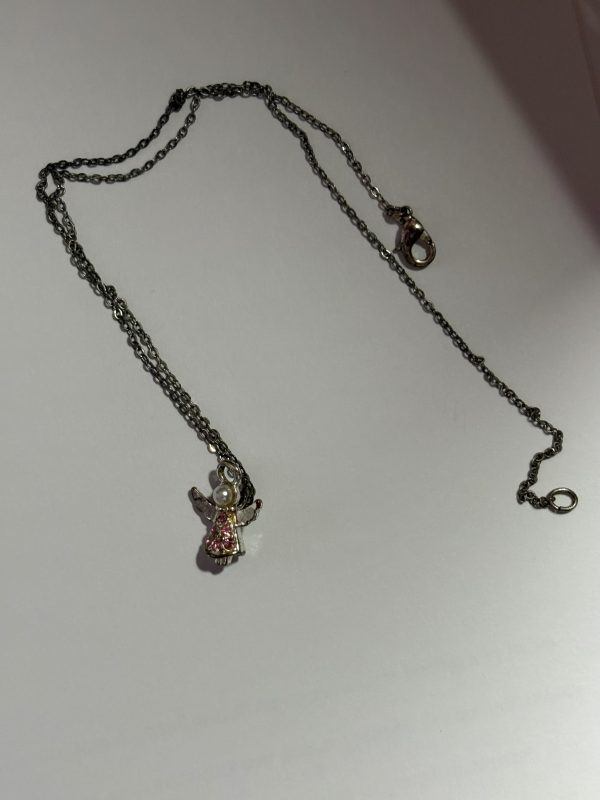
When I was born, my great-grandmother traveled from Argentina to New York City, where she gifted me and my twin sister necklaces. Each necklace had a silver charm of an angel, with a pearl for its head and gems lined up along its body. Similar to my sister and I, the necklaces were identical, except for one difference. The gems on my necklace were pink, while the gems on my sister’s necklace were blue. As my sister and I grew up, our favorite colors later became the same ones on each of our necklaces. Although the necklaces are such small objects, they always held a deeper meaning within our family. By gifting these necklaces to us, my great-grandmother created a connection between generations of our family. She passed away when I was young, leaving me with very faint memories of her, but my necklace still serves as a reminder of this connection and of my Argentinean heritage.

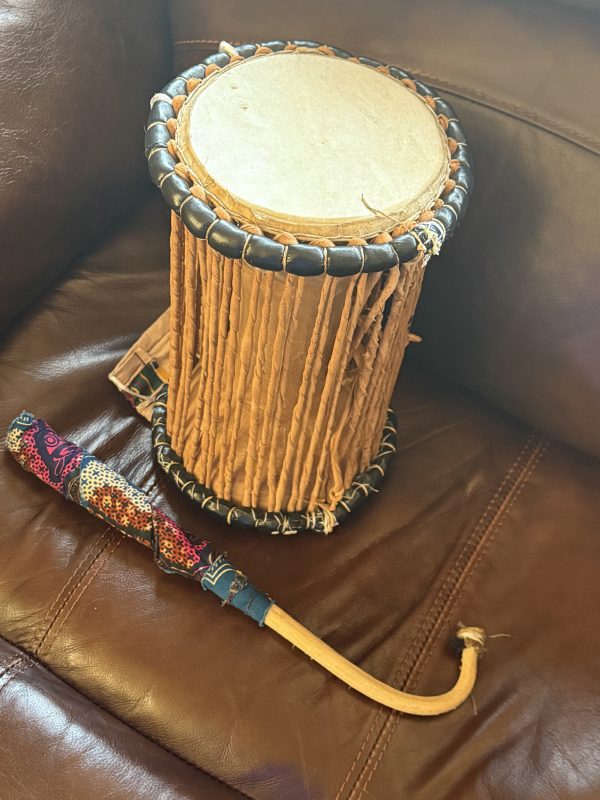
A sound carrier: My uncle’s talking drum

On a shelf in my uncle’s reading room sits a small talking drum. You can easily recognize it by its wooden frame, which is surrounded by leather strings and fitted with two leather faces. The drum only ever leaves the shelf when someone asks about it, and when it does, it always ends up in my uncle’s hands. He is very fond of it and his arms tend to fold around it like wings closing over a nest.

Traditionally, the drum is used during celebrations and coronations for kings because it has the ability to mimic the tone of a person’s voice. However, in my family, it takes on a different role. When it comes out, we gather around whoever is playing and take turns trying to guess what the drum is saying. When it reaches my uncle, the drum settles into a playful rhythm that makes people want to dance. Its crisp, tight sound is what first attracted my uncle to it. That sound was harder for him to find after he moved to the United States in the 2000s, which prompted him to get a talking drum of his own. The sound of the drum celebrates my family’s life in the U.S, but like a heartbeat, it is also a reminder of home. We carry the sounds of home with us, and the talking drum is my family’s way of sharing that sound.

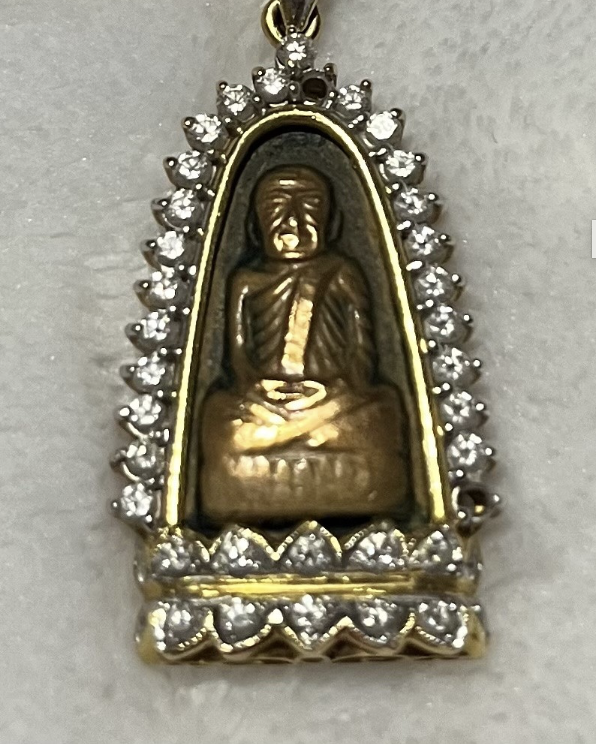
Gold Buddha

The object I have chosen is my gold and diamond Buddha necklace. It was custom-made in Thailand for me when I was a child. My mom’s side of the family is Thai, and I grew up practicing Buddhism in America. Although, until the age of 10, I went to a private Catholic School, I wore my necklace. Without realizing, it became a reminder of my family’s roots when I was surrounded in a culture around me that wasn’t mine. There’s a specific kind of pressure that comes with growing between two cultures. Do you assimilate to your environment, or stay true to your own beliefs? My Buddha necklace was something I prayed to in times of struggle, when I needed good luck, or when I needed guidance. The reality of never taking off this necklace reflected my family, my culture, my overall morals and character.

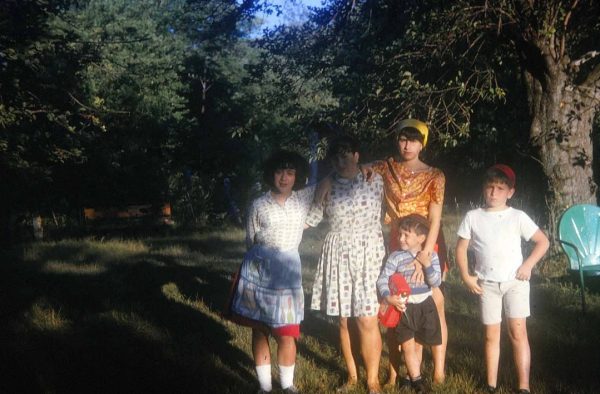
Photograph of Family Members in the Catskills, c. 1966

My object is a photograph of my grandmother and her siblings in the Catskills, taken in or around 1966. In the photograph, my grandmother is around 12 years old. My grandmother died from cancer when my father was a teenager, and thus I have never met her. She had eight children, and when her children had daughters, they named them after my grandmother. I often joke that I can know the birth order of my cousins based on what their names are, since if one of them has my grandmother’s name, I know for certain that she is the oldest daughter. Since my grandmother died long before I was born, I have very little tangible connections with her, especially since neither my father nor his siblings tend to speak much about who my grandmother was as a person. This photograph of her is one of the few objects I have that allow me to connect with my grandmother, and see her as a real person rather than as a character that occasionally appears in discussions with family members.

Symbol of Sikhism

The object I chose is my kada, the bracelet I wear on my wrist every day. It might look simple, just a plain silver circle, but it means a lot to me because it represents my religion, Sikhism.

I’ve actually worn it my whole life. Since I was born, I always had one on, and every time I grew out of it, I would get a new one. It’s something I’ve never taken off, literally never. Because of that, it feels like a part of me, not just something I wear.

As I got older, I started to understand its meaning more. It reminds me to stay strong, make good decisions, and stay connected to my values. Even in normal moments, I notice it, and it kind of keeps me grounded. Overall, my kada isn’t just a bracelet; it’s something that’s always been with me and always reminds me of who I am.

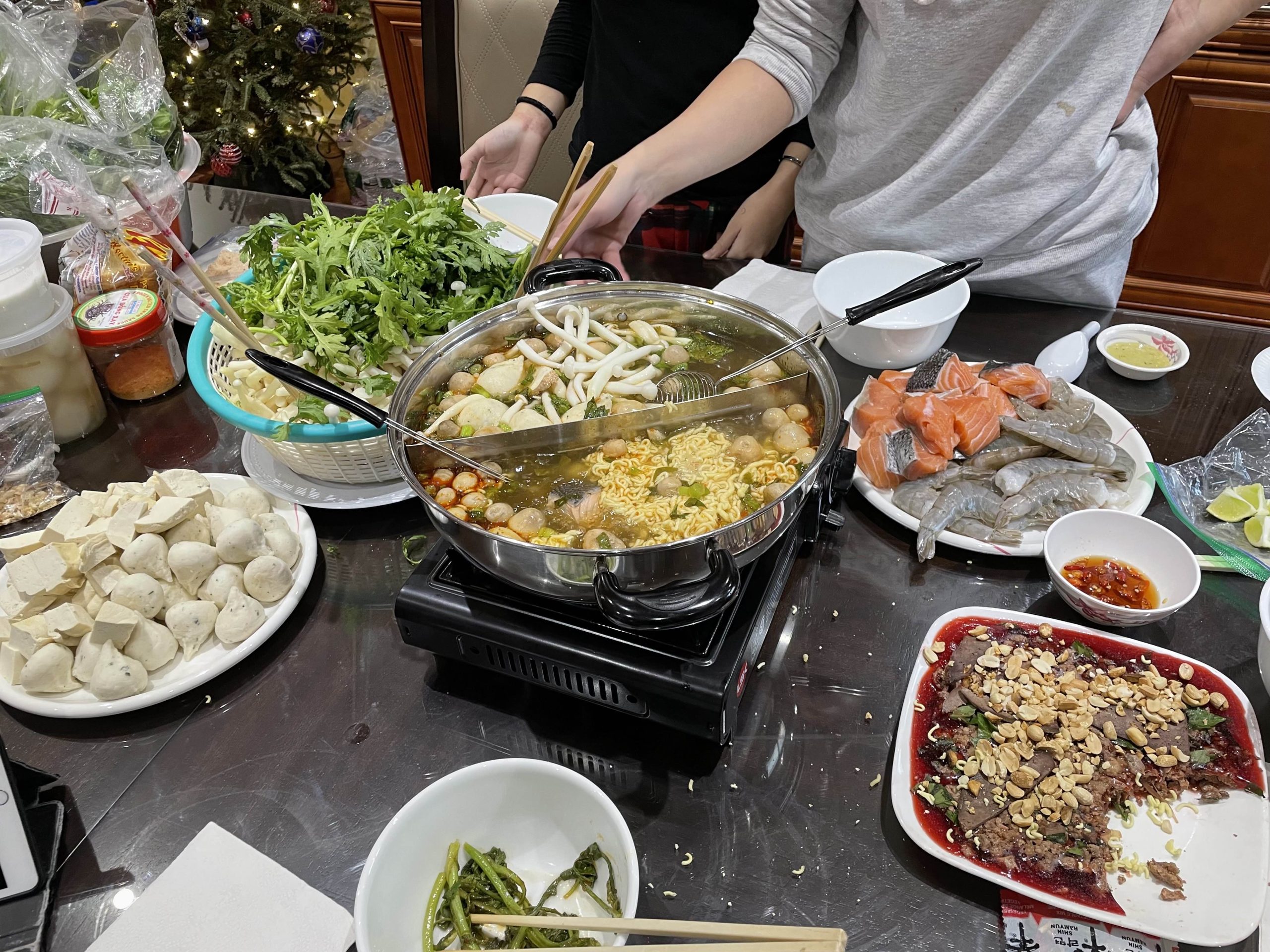
A Vietnamese Family’s Hotpot

My family doesn’t have many grand objects from our Vietnamese heritage. And of those we do own, I don’t have much personal attachment to them. However, something that I’ve grown up with that I do adore is the Hotpot we always use for big dinners. I don’t know when we got it, all I know is that this pot has been in our family for as long as I can remember. Whenever we have a large group of people, usually family from out of state, we always use this for dinner. This picture is actually from Christmas dinner 2024.

The reason this pot means so much to me specifically is because of how many memories of mine revolve around this piece of cookware. Hotpot always leads to lighthearted conversations, a delicious meal, and patiently waiting for our food to finish cooking. The food each person chooses to cook and eat always reflects who they are. I remember that this specific night was when I tried fish roe dumplings for the first time and fell in love. In fact, part of the reason I’m in college is because of this pot as I actually wrote my college essay on it.

Whenever I go into storage to grab the pot, every memory of the fun and laughter it’s brought to my family comes flooding back. It may not be as glamorous as a piece of jewelry or as grandiose as a family heirloom, but our Hotpot has brought my family a sense of joy that just can’t be recreated.

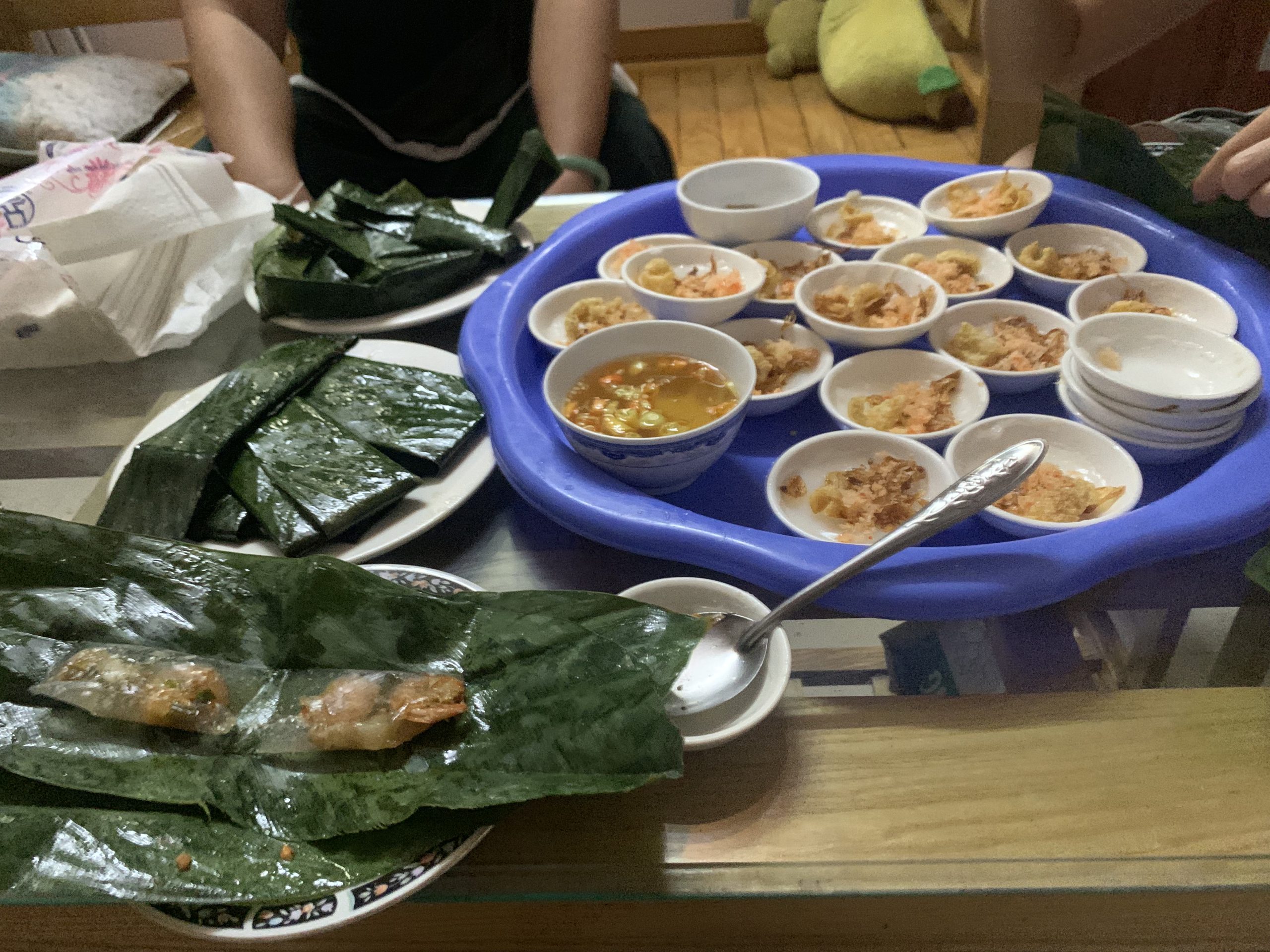
Bánh bèo & Bánh bột lọc

Bánh bèo and Bánh bột lọc are bite sized, savory Vietnamese dishes from the city in Vietnam that my father is from, Huế. Bánh bèo is uniquely served on small, individual dishes, and my father always told me that stacking the dishes became a competition of who could eat the most. Bánh bột lọc is wrapped, steamed, and served in banana leaves, and perhaps part of how much I love this dish is because of the element of surprise. When we eat these dishes, my father always reminds me to drown my bites in the slightly sweet and spicy Vietnamese dipping sauce served on the side, Nước chấm. I’ve been to many Vietnamese restaurants in New York and these specific dishes are rare to find. Ever since I was young, my family would often make an entire trip to Philadelphia to visit an authentic Vietnamese bakery called Ba Le that has a vast selection of traditional Vietnamese desserts, sauces, and dishes. For gatherings, my family sometimes orders large platters of Bánh bèo and Bánh bột lọc from a local family in Queens. When I visited my family in Huế in the summer of 2023, I was so excited to try Bánh bèo and Bánh bột lọc from my aunt’s neighbors. It was served exactly how I’d always eaten it, but it was even more special now that I was enjoying it with my family in Vietnam. Whenever I think of the taste of Vietnam, the first thing I think of are these two special dishes.

Proudly powered by WordPress | Theme: Baskerville 2 by Anders Noren.

Up ↑