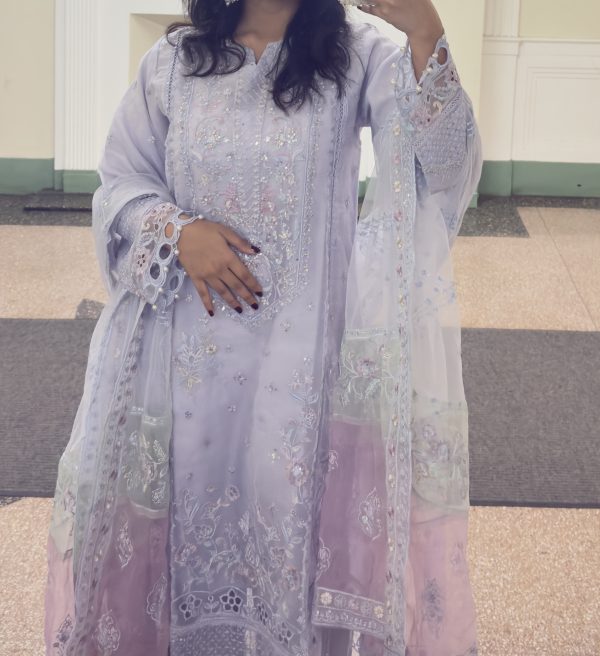
The object I chose is a lavender Bengali salwar kameez, detailed with soft pastel embroidery and paired with a light, flowing dupatta(scarf). I wore it for Eid-Ul-Fitr in 2026 in Queens, New York. At first glance, it is simply a traditional outfit, but to me, it carries a story shaped by memory, growth, and identity.Most of all, it brings nostalgia. The delicate patterns remind me of Eid mornings in Bangladesh when I used to get ready with my cousins, share laughter, and feel surrounded by family. Those moments feel distant now, yet this dress allows me to hold onto them.At the same time, wearing it in New York shows a different side of my identity. In a city where Muslim communities are visible and welcomed, I can celebrate Eid openly. It shows how different communities in Queens tend to have a positive attitude towards different religions. This balance between comfort and change defines my experience.What makes this outfit especially meaningful is that I bought it with my own money. As a child, I admired clothes like this but could not always afford them. Now, earning my own income reflects my transition into adulthood and independence. Although life in the United States is different, this salwar kameez keeps me connected to Bangladesh. It represents both who I was and who I am becoming, showing that identity can grow without being lost.
I Don’t Need the Bat Anymore
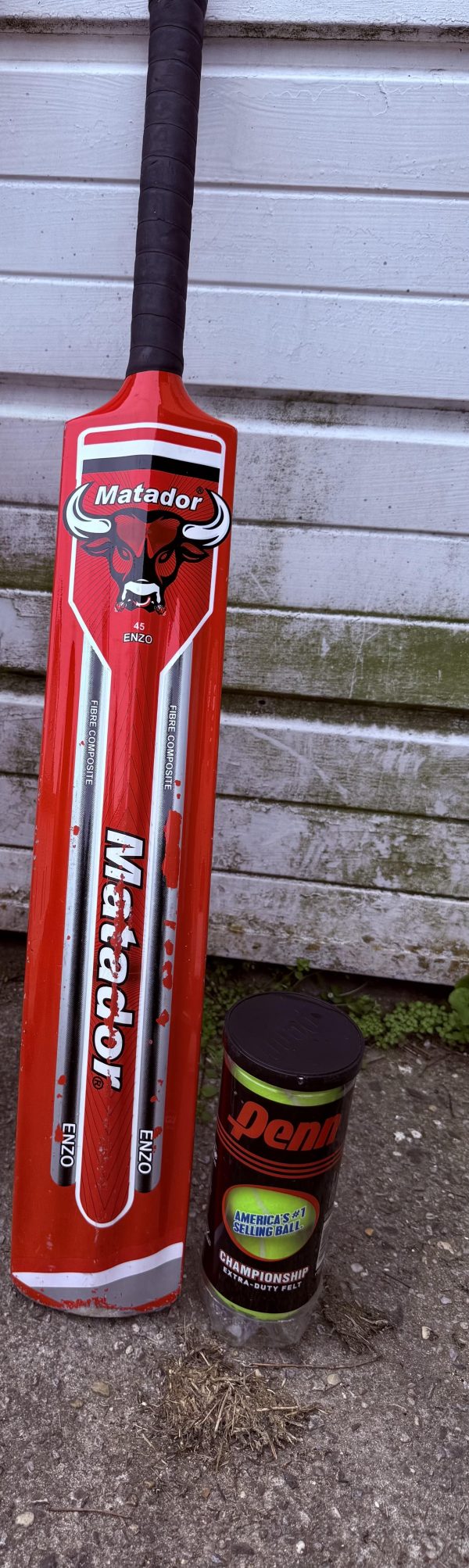
When coming from Trinidad to New York City in early 2001, my dad brought along the most important tool needed to keep his passion alive: his cricket bat. This wooden bat has evolved throughout centuries, dating all the way back to the 17th century in England and it’s swung low to hit a ball. Growing up in a West Indian neighborhood in New York City, cricket was a common sport to me, and I believed it was a globally famous one, like basketball and soccer, that everyone in the world knew and played at least once. However, as I got older and started to become more familiar with New York City as a whole, I realized my childhood community, specifically my father, influenced this way of thinking. 2013 was the first time I held and was taught how to swing a cricket bat by my father. At that age I was shorter than the official bat itself and needed a smaller one, but nonetheless my dad started to pour all the culture of cricket from Trinidad into my mind and hands. This cricket bat, or really the sport of cricket as a whole, puts into focus the impact of Trinidadian immigration and its effect on the New York community, as cricket has become a much more popular sport with many professional leagues in our boroughs. Now, I can stand above the bat and swing just like he taught me to.
The Greatest Fast-Food: Turkish Döner
Gyros, shawarmas, and al pastor tacos. Besides being delicious, what do they all have in common? They are all different variations of the same food: the Turkish döner kebab. The dish consists of seasoned meat in the form of beef/lamb mix or chicken, roasted on a vertical rotating spit device. Döner can be eaten as a sandwich or alongside rice. My parents both ate döners often as children when growing up in Turkey during the 80s and 90s, whether it was a cheap version from a shop off the streets, or a better quality and more expensive version in Turkish restaurants.
My Dad, pictured above in the year 1998 next to a döner device in a Turkish restaurant in Brooklyn, described döner as a “comfort food.” When they immigrated here in the late 1990s, döner became a bridge to Turkish culture for them despite being abroad. For me, growing up in NYC meant eating many different versions of döner: whether it was from an authentic Turkish restaurant in Astoria, a gyro from a Greek food cart, a Berlin-style döner with fresh vegetables and tasty sauces, or as a home-made Iskender kebab (a different Turkish dish with döner meat). All of these foods, while delicious to eat, provide a special connection to me through döner being a cross-cultural food, allowing me to connect my childhood and the döner I eat/ate here to what my parents ate in Turkey.
Poncho
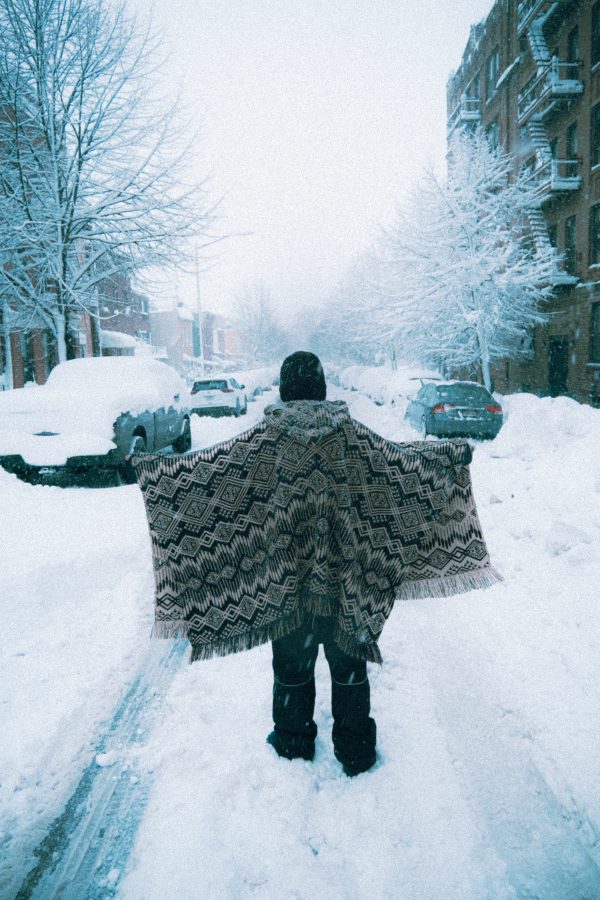
The object I picked of this story is named the poncho. The poncho is prominent in the countries
that reside in the Andes mountains; like from Venezuela all the way to the bottom tip of southern
America which is Argentina. In each country there are different renditions of it with some
prioritizing patterns and or colors etc. The main use of these garments is to protect oneself
against the harsh winds and cold weather of the regions near the Andes Mountains range, dating
back to B.C.E times were indigenous people lived across the large stretch of mountains. My
family and I each got our own ponchos, but I tend to be the one to use it the most. The poncho I
got in Chile, even though I am Ecuadorian marks an important part of my life. Before going to
Chile, I was at a low point of my life, and when my uncle told, me lets go meet some of my
family over there, I instantly said yes. Those 10 days were life changing; I never seen so many
different biomes and animals. My favorite thing to do over there was just staring towards at the
mountain through the car window, cramped in the car with my family. Although the poncho
signifies a changing point in my life, it also signifies my ancestral and family roots. As the only
out of my extended family to be born outside of Ecuador, I always felt like an outsider to my
culture and family, however when I put into my poncho, which is almost daily, I feel more
connected. A nice idea I thought of was the same way ponchos span across the many countries
that contain the Andes Mountains. No matter if we are in Ecuador, Chile, Colombia, and United
States whenever we put our ponchos we’re all connected as a family and to our roots.
Celebrating Christmas at Home and Across the Country
My family has always valued celebrating the holidays together. Every Christmas Eve, my whole family, including my cousins, aunts, uncles, in-laws, and even plus ones, come together and have a big dinner followed by dessert and games and presents. Every year, a different family hosts. It rotates between my house and my two aunt’s houses. We start from dinnertime till late after midnight. Everyone spends the day cooking, baking, or working, then we all hangout together at night. By the end of the night, people are dropping like flies and falling asleep on any couch in sight. This tradition may have only started a few years ago, but it has quickly become something I look forward to every year. It’s a way for everyone to come together and create special memories during the holidays, which can be when you need company the most.
Not only am I lucky enough to spend Christmas with my family in the United States, but I also get to spend it with my family in the Philippines. My parents immigrated from the Philippines when they were young, and slowly all my father’s side came to America too, but minus my mother, her family is all still in the Philippines. Shortly before we started this holiday tradition, one of my family members sent us a traditional, star-shaped Filipino Christmas lantern called a parol. The lantern symbolizes hope, faith, and the triumph of light. Ever since we received this gift, we put it up in the windows, turn it on, and let it light up the house. Having this lantern makes it feel like my family in the Philippines is celebrating with us. Whether it’s in my house or from across the country, I will always feel my whole family’s love during the holidays.
– HC
The Megillah
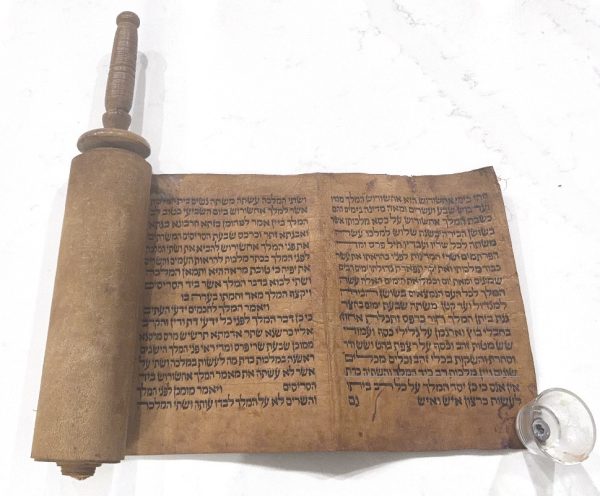
This Megillah was a constant companion in my family’s journey across multiple countries, keeping them connected to their roots. A Megillah is a Hebrew scroll read every year on the holiday of Purim. This Megillah was made in the city of Tetouan, Morocco, where my family lived until the mid-20th century. In the 1950s, after Morocco’s independence, the Megillah took on a more meaningful role in my family. Tension rose between the Muslim and Jewish communities in Morocco. Families started to leave behind the only lives they knew in order to escape the pressure. My family moved to Israel, where they could freely practice their religion. Due to economic difficulties, my family migrated to New York City in 1982, their final destination. Despite various moves, the Megillah has remained a constant pillar and has become a symbol of their identity. Today, our family’s Megillah is read annually in my local synagogue on the holiday of Purim, a community tradition. This object represents the immigrant experience in America by blending personal experiences and community. NYC is a city built by generations of immigrants who have each brought their own unique culture. The Megillah is an example of how culture and tradition can be maintained while still being part of a broader American identity.
Family Cookbook
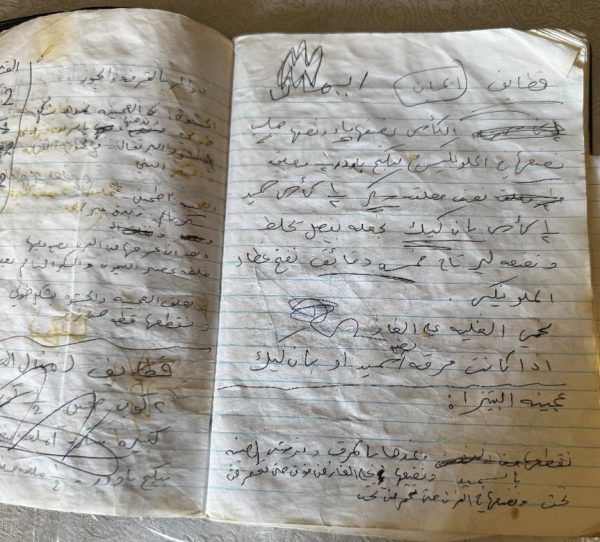
This is a photo of a page from a cookbook my mother has had all my life. The notebook is old and clearly well used, with wrinkled pages, faded ink, and small stains from ingredients that were probably spilled while cooking. My parents’ main language is Arabic, which makes sense for the recipes to be written in Arabic as well. Typically, Arabs don’t follow recipes. If you asked an Arab mother how to make a dish she would tell you, “Just add a little bit of this and all the spices you have in your cabinet” (safe to say Arab food is never under seasoned). But my mother made this cookbook specifically for desserts. She’s not much of a baker as it requires precise measurements, so to make it easier for herself she wrote the recipes down. If anyone can read Arabic, they can tell that this recipe isn’t exactly as specific as a recipe written in English, but it’s specific enough that any Arabic speaking person will understand it. This book is important because it carries the different desserts the represent the culture my parents left behind when they came to the United States from Palestine. It was a way for them to bring with them a piece of home where they started their new lives.
Gold Buddha
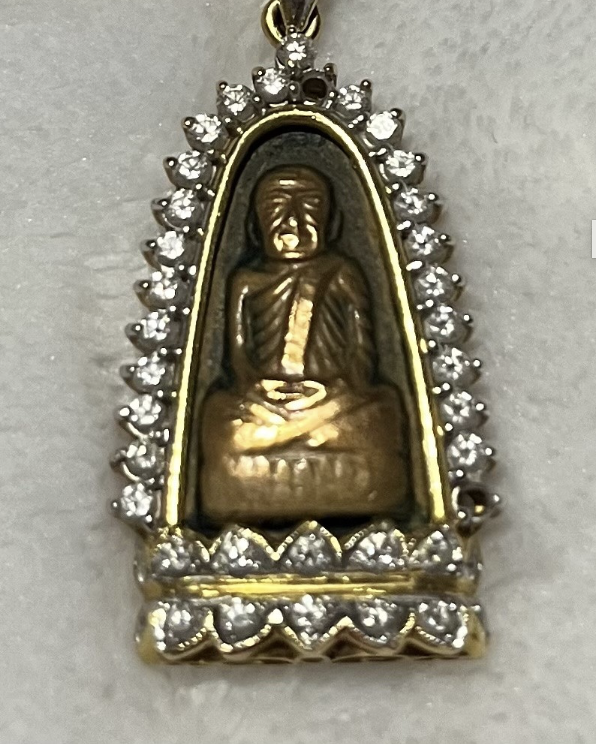
The object I have chosen is my gold and diamond Buddha necklace. It was custom-made in Thailand for me when I was a child. My mom’s side of the family is Thai, and I grew up practicing Buddhism in America. Although, until the age of 10, I went to a private Catholic School, I wore my necklace. Without realizing, it became a reminder of my family’s roots when I was surrounded in a culture around me that wasn’t mine. There’s a specific kind of pressure that comes with growing between two cultures. Do you assimilate to your environment, or stay true to your own beliefs? My Buddha necklace was something I prayed to in times of struggle, when I needed good luck, or when I needed guidance. The reality of never taking off this necklace reflected my family, my culture, my overall morals and character.