The Greatest Fast-Food: Turkish Döner

Gyros, shawarmas, and al pastor tacos. Besides being delicious, what do they all have in common? They are all different variations of the same food: the Turkish döner kebab. The dish consists of seasoned meat in the form of beef/lamb mix or chicken, roasted on a vertical rotating spit device. Döner can be eaten as a sandwich or alongside rice. My parents both ate döners often as children when growing up in Turkey during the 80s and 90s, whether it was a cheap version from a shop off the streets, or a better quality and more expensive version in Turkish restaurants.

My Dad, pictured above in the year 1998 next to a döner device in a Turkish restaurant in Brooklyn, described döner as a “comfort food.” When they immigrated here in the late 1990s, döner became a bridge to Turkish culture for them despite being abroad. For me, growing up in NYC meant eating many different versions of döner: whether it was from an authentic Turkish restaurant in Astoria, a gyro from a Greek food cart, a Berlin-style döner with fresh vegetables and tasty sauces, or as a home-made Iskender kebab (a different Turkish dish with döner meat). All of these foods, while delicious to eat, provide a special connection to me through döner being a cross-cultural food, allowing me to connect my childhood and the döner I eat/ate here to what my parents ate in Turkey.

The Cross That Traveled With Us

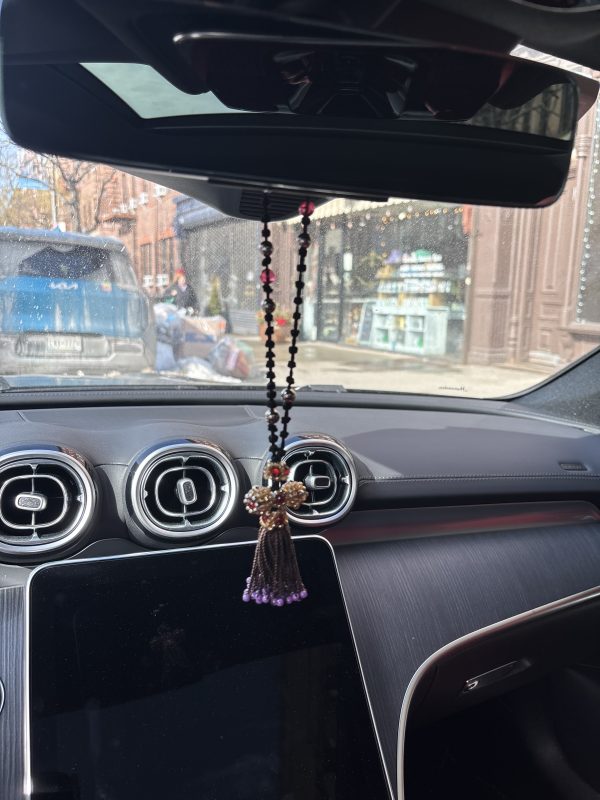
When my mom left Lithuania to start a new life in New York City, she didn’t bring many belongings with her. But she did bring one small object: a beaded cross that now hangs from the rearview mirror in our family’s car. To anyone else, it might look like a simple decoration, but to us it represents protection, memory, and the feeling of being watched over.
My mom grew up surrounded by Catholic and Orthodox traditions, and this cross was something familiar she could hold onto when everything else felt uncertain. When she first arrived in New York, she didn’t know the language, the streets, or the people. Hanging the cross in her car became a quiet ritual that made her feel safer. Over time, it became part of our family’s daily life. Every time we drive, it swings gently with the movement of the car, reminding us of where we come from and the journey that brought us here.
As I’ve gotten older, I’ve realized how much meaning is wrapped up in this small object. It carries my mom’s courage, her faith, and the hope she had when she left home. It also connects me to a larger story shared by many immigrant families who bring pieces of their past with them to feel grounded in a new place. This cross is more than an ornament, it is a symbol of protection, heritage, and the path my family took to build a life in America.

Red Lees Duck

Red lees duck always means the same thing in the family: everyone is home. Whenever this dish appears on the table, it’s a signal of a family gathering. It’s enjoyed by everyone while we catch up on life.
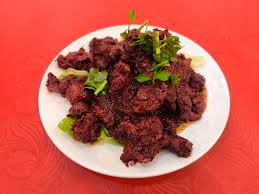
Red lees, known as hongzao in Chinese, is a product of fermenting glutinous rice with red yeast rice to make red rice wine. The bright red paste has a slight sweet, savory flavor that pairs super well with rice. It’s a common well loved condiment in many Fujianese households.
At every big holiday, my grandma would make this dish. It’s a dish that she learned from her older sister back in China, long before our family ever imagined life in America. Now it has become almost automatic: Chinese New Year, reunions, birthdays; there’s always a pot of red lees duck simmering on the stove.
Through this dish, I get a glimpse into the life that my grandma left behind. When she came to the U.S. in 2015, she didn’t bring much with her, but she brought her recipes and culture. Red lees duck was one of them. My grandma is the main reason why I’m so in touch with my culture despite us having little to no relatives in the U.S.

From One Apartment to the Next

In the 1940s, my great-grandmother, Elza Weinman, and her family fled the Nazis in Belgium and eventually settled on the Upper West Side of New York City. They first lived at 145 West 86th Street, where many other Belgian Jewish families who had also escaped Europe began rebuilding their lives. A strong community quickly formed around shared history and culture. West 86th Street was an ideal place to start over because it connected residents all over Manhattan. The neighborhood was lively, filled with shops and businesses, and it was especially known for jewelers like her husband, Leon. While living there, she attended high school and soon after got married and moved just down the block to 98 Riverside Drive. When they were expecting their second child, they needed more space and moved again to 200 West 86th Street for the next 67 years. Those visits are the only memories I have of my great-grandmother, who passed away during my early childhood. I remember being ten years old when my mom would pick me up from school to go visit her. We took the elevator up to the 14th floor, and I remember this vividly because it was when I learned a 13th floor doesn’t exist. We spent the night playing games and watching the Giants vs. Redskins game. The following morning ended with the sweetest treat of all: Dunkin’ Donuts and the tightest, slightly painful, squeeze on the cheek. Although the apartment is gone now, its story lives on, because the journey that brought my great-grandmother to New York City eventually led to me growing up at 225 E 6th Street, a Jewish-built community as well.

A sound carrier: My uncle’s talking drum

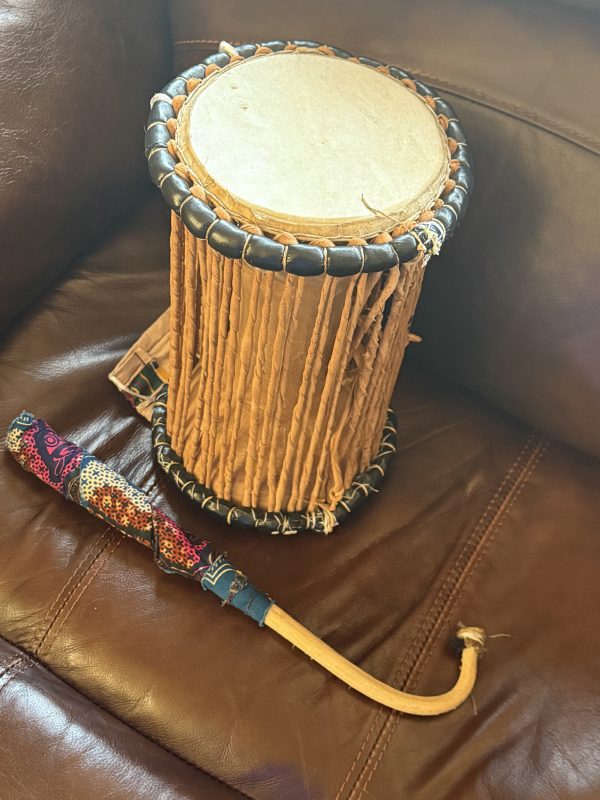
On a shelf in my uncle’s reading room sits a small talking drum. You can easily recognize it by its wooden frame, which is surrounded by leather strings and fitted with two leather faces. The drum only ever leaves the shelf when someone asks about it, and when it does, it always ends up in my uncle’s hands. He is very fond of it and his arms tend to fold around it like wings closing over a nest.

Traditionally, the drum is used during celebrations and coronations for kings because it has the ability to mimic the tone of a person’s voice. However, in my family, it takes on a different role. When it comes out, we gather around whoever is playing and take turns trying to guess what the drum is saying. When it reaches my uncle, the drum settles into a playful rhythm that makes people want to dance. Its crisp, tight sound is what first attracted my uncle to it. That sound was harder for him to find after he moved to the United States in the 2000s, which prompted him to get a talking drum of his own. The sound of the drum celebrates my family’s life in the U.S, but like a heartbeat, it is also a reminder of home. We carry the sounds of home with us, and the talking drum is my family’s way of sharing that sound.

Gold Buddha

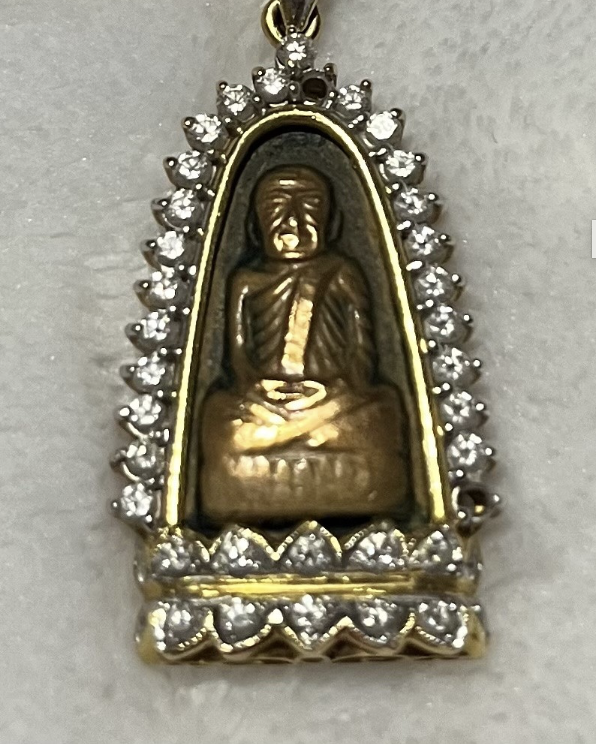
The object I have chosen is my gold and diamond Buddha necklace. It was custom-made in Thailand for me when I was a child. My mom’s side of the family is Thai, and I grew up practicing Buddhism in America. Although, until the age of 10, I went to a private Catholic School, I wore my necklace. Without realizing, it became a reminder of my family’s roots when I was surrounded in a culture around me that wasn’t mine. There’s a specific kind of pressure that comes with growing between two cultures. Do you assimilate to your environment, or stay true to your own beliefs? My Buddha necklace was something I prayed to in times of struggle, when I needed good luck, or when I needed guidance. The reality of never taking off this necklace reflected my family, my culture, my overall morals and character.

More than a Scarf

“Come on, Baba. We’re almost late for the prayer at the masjid,” I exclaim.
He responded: “Give me a second. I’m going to get our ajraks.”
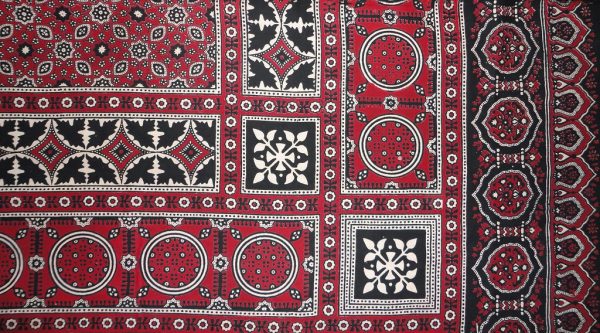
My father has always taken great pride in our culture as Pakistani-Americans living in what he called the greatest city of the world. Regardless if we have to run to the mosque to attend the Eid prayer on time, Baba emphasized the importance of carrying the ajrak with us whenever we go. The ajrak is a cultural scarf embroidered with all sorts of geometric and kaleidoscopic images. Yet to my dad, it was more than a mere piece of clothing worn around the neck. It was one of the only tangible links in his possession that connected him to his village in Sindh, Pakistan which was over 7,000 miles away.
His passion eventually became my own as I started wearing the ajrak for my high school’s cultural events and festivities. I was proud to display the culture that my parents carried with them from Pakistan and wanted to share it with others, telling them of the ajrak’s history and its familial significance. It was small moments like these that reaffirmed to me why my father dedicated himself to preserving his culture abroad. No matter where I am in the world, as long as I have the ajrak, I will always have a piece of my home with me.

Muchnick Family History

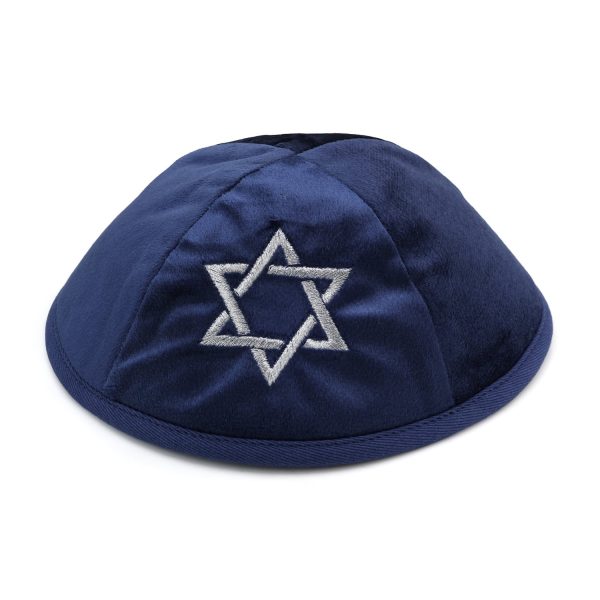
My family’s story is one of migration, survival, and identity, shaped by the waves of immigration that built New York. On my mother’s side, my grandparents are first-generation Holocaust survivors: my grandmother came from Kisvárda, Hungary, a small town whose once-thriving Jewish community was nearly wiped out during the Holocaust, and my grandfather came from Soviet Ukraine. In 1977, feeling there was no future for Jews in Europe, they immigrated to America and settled in Mill Basin, Brooklyn, among other immigrants with similar stories. On my father’s side, the family was already rooted in America, settling on Long Island in Nassau County, though the connections to Europe were never far away—my great-grandmother survived the Holocaust in Hungary before making her way here, and my great-grandfather served in the U.S. Army during World War II, leading a post-war interrogation unit. What carried over from the old world was less about language, since my grandparents speak fluent Hungarian and Russian but never taught it to me, and more about a deep sense of Jewish identity. If I had to choose one object to represent my family, it would be a kippah—small, simple, but carrying everything. My family left Europe because they were Jewish, survived because they held onto who they were, and rebuilt in Brooklyn and Long Island because New York gave them a fresh start. Their story connects directly to the Jewish experience on the Lower East Side and the broader history of immigrant New York.

Proudly powered by WordPress | Theme: Baskerville 2 by Anders Noren.

Up ↑