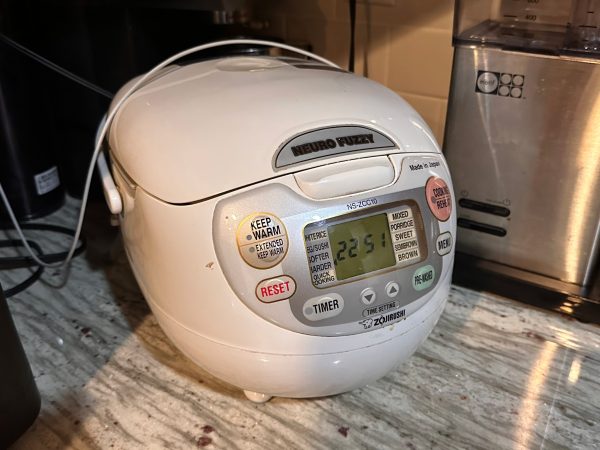
Anyone who lives in an asian household probably uses this every day. My family as well. For almost every meal, we have white rice. Eating rice with miso soup on the side is an essential everyday part of Japanese food culture, and I believe it is important to stay connected to it even when I am not in Japan.
The versatility of rice is what makes it special. Of course, you can eat it directly, but there are many other dishes you can make from rice itself. For example, you can shape the rice into a ball and put ingredients of your preference inside, called onigiri (おにぎり). You can season it with furikake (ふりかけ) or pour Japanese curry over it and enjoy it as curry rice.
The most important time of year for making rice dishes is the New Year. The rice is hammered together until it becomes one big blob, which we all know as mochi (もち). You can enjoy the plain mochi’s stickiness, or, for those who want some flavor, you can add soy sauce or sugar. The mochi is also used in soups called o’zoni (おぞうに) and oshiruko (おしるこ), both of which are traditional New Year’s dishes. The food Japanese people eat on New Year’s is different from the food they eat daily. My family sets up an entire feast, and instead of eating white rice, we eat mochi and other traditional New Year’s delights.

