Every night after dinner, my mom asks me a one-word question: “Tea?” After I nod my answer, she pulls out two teacups, two saucers, and a teapot from the cabinet behind her. In the teapot, she prepares zavarka, a concentrated form of tea, using black tea, named Paris, which I bought from a company based in SoHo. Over tea, she tells stories about her home country, Moldova, and adjustment to NYC. In 1993, my mom and her family immigrated to NYC from Moldova, along with the 35,900 other Jews emigrating from the former Soviet Union. After 1970, the largest wave of Jewish immigration since the 1920s occurred, and one of the largest locations of settlement was NYC. Migration was influenced in part by war breaking out when Transdniestria, now considered a region in Moldova, declared independence from Moldova. This region was composed mostly of the minorities of Moldova’s population, and Moldova refused to recognize it. When she escaped this situation as a refugee to NYC, my mom was one of many Soviet-Jewish women married early. She received one of the most common Soviet wedding gifts: a tea set. This set now stands in a cabinet in my mom’s kitchen, displayed as a reminder of her Soviet roots, but when used with American tea and her American daughter, the tea set reminds my mom of her adjustment to a new home.
Psalms and Self-expression: The Bukharian Jewish Journey
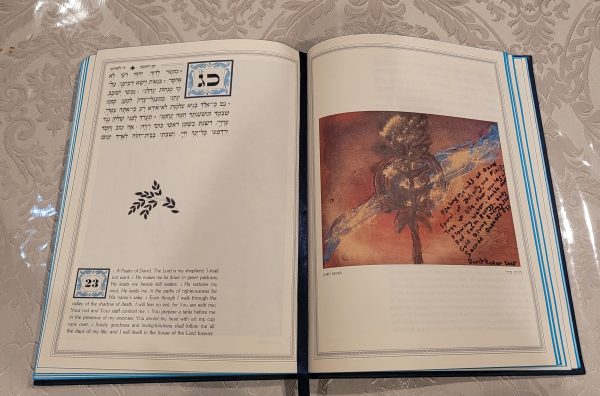
This Book of Psalms was gifted to me by my parents in August of 2018. They were drawn to this contemporary version of the ancient text because it includes different paintings from Jewish artists to match the tone of each Psalm. The Book of Psalms, which Jewish tradition attributes to King David, has been an integral part of Jewish culture for three thousand years. The 150 poems that compose the Psalms reflect diverse themes, such as faith, hardship, and determination. My family is Bukharian Jewish: Jews from Central Asian countries like Uzbekistan. The Book of Psalms has shaped my family’s journey to New York as they escaped the Soviet Union in 1991 and found comfort in the Psalms’ humanity. Chapter 23 of Psalms, which is recited every Sabbath, resonates particularly with Bukharian Jews who immigrated to New York because it contains themes of uncertainty, self-confidence, and belief in God’s protection amid hardship. My object reflects the immigration journeys of Bukharian Jews, who have achieved success despite facing challenges, while maintaining their heritage. To many Bukharian Jews, achieving their dreams and having the freedom for self-expression is the epitome of the American identity. Just as my Book of Psalms contains different pieces of art, Bukharian Jews allowed their creativity to shape their individual paths after immigrating to New York, each embodying their own version of what it means to be an American.
Muchnick Family History
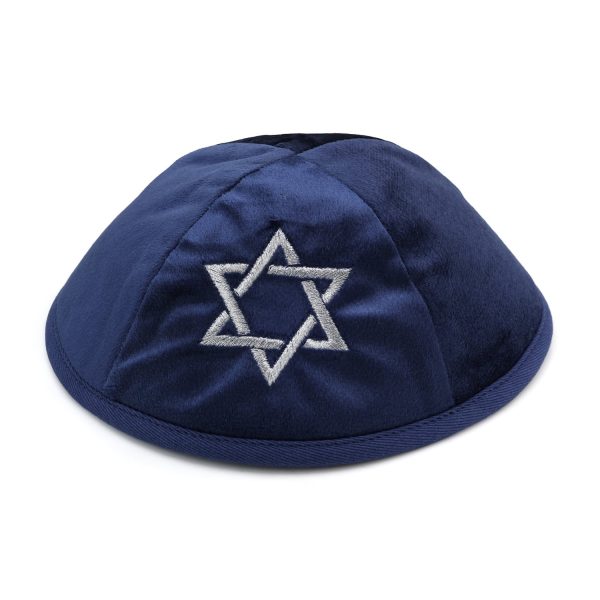
My family’s story is one of migration, survival, and identity, shaped by the waves of immigration that built New York. On my mother’s side, my grandparents are first-generation Holocaust survivors: my grandmother came from Kisvárda, Hungary, a small town whose once-thriving Jewish community was nearly wiped out during the Holocaust, and my grandfather came from Soviet Ukraine. In 1977, feeling there was no future for Jews in Europe, they immigrated to America and settled in Mill Basin, Brooklyn, among other immigrants with similar stories. On my father’s side, the family was already rooted in America, settling on Long Island in Nassau County, though the connections to Europe were never far away—my great-grandmother survived the Holocaust in Hungary before making her way here, and my great-grandfather served in the U.S. Army during World War II, leading a post-war interrogation unit. What carried over from the old world was less about language, since my grandparents speak fluent Hungarian and Russian but never taught it to me, and more about a deep sense of Jewish identity. If I had to choose one object to represent my family, it would be a kippah—small, simple, but carrying everything. My family left Europe because they were Jewish, survived because they held onto who they were, and rebuilt in Brooklyn and Long Island because New York gave them a fresh start. Their story connects directly to the Jewish experience on the Lower East Side and the broader history of immigrant New York.
Mezuzah
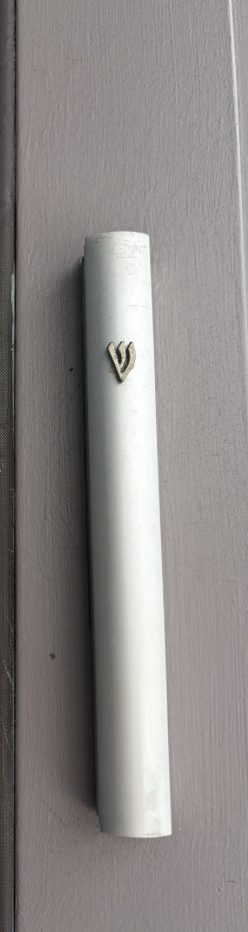
The mezuzah holds a sacred Jewish prayer and is carefully attached to my doorpost, serving as a constant reminder of my family’s faith and identity. Inside it is the Shema, one of the most important prayers in Judaism, which affirms my belief in God and his protection. Each time I pass by, whether entering or leaving, it quietly reinforces a sense of connection to my religion and the values that shape my life.
More than just a ritual object, the mezuzah represents protection. We believe it watches over the household and those within it, offering a spiritual safeguard. At the same time, it designates our home as a Jewish space, marking it with intention and meaning. It is a small but powerful way of expressing identity, not loudly, but with quiet confidence and continuity.
Its straight position on the doorpost is especially significant. While many Jewish families place the mezuzah at an angle, ours reflects the Syrian Jewish tradition that has been passed down for generations. This detail connects me directly to my heritage, honoring the customs of my ancestors. In this way, the mezuzah is not only a religious symbol but also a cultural one, preserving tradition while continuing to shape my sense of belonging in the present.