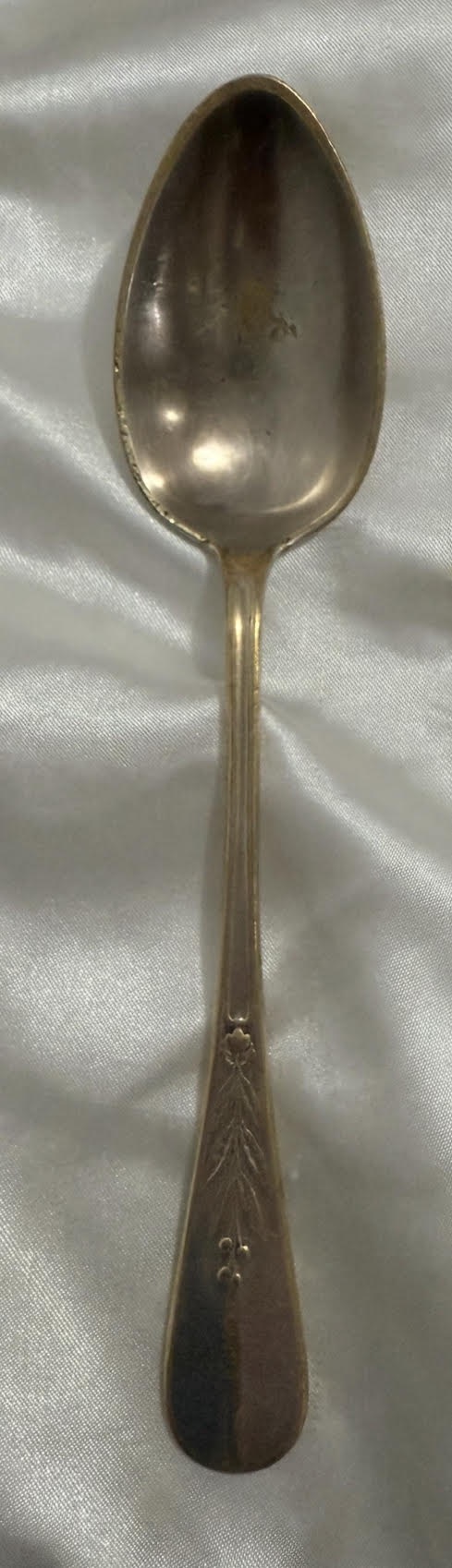
From Silk Road trading tables to my family’s Passover seder in Queens, this gold-plated “Passover spoon” has carried nearly two centuries of movement across continents, holding a significance far greater than the meals it serves. Each year at our Passover seder, we share a bite of my grandmother’s Plov from this spoon, preserved since 1828. As a child, I was fascinated and repelled by how many mouths the spoon had touched, but now I see it as a witness to migration, trade, faith, and continuity. Family oral history suggests the spoon was acquired through trade, reflecting generations of interactions and shared meals among Muslims and Jews in Central Asia. My father’s side of the family are Bukharian (Mizrahi) Jews with roots in Iran, Afghanistan, and Syria, who worked as merchants along the Silk Road before settling in Tajikistan. They lived under Russian and Soviet rule until my father immigrated to New York in 1992. Earlier periods reflected coexistence and shared commerce between Muslims and Jews, but rising antisemitism and restrictive Soviet policies led to major waves of Jewish emigration in the 1970s and early 1990s. Religious holidays, meals, and language unify my family. We speak Russian, Bukharian (a dialect of Farsi), and English. This spoon brings these elements together in a single ritual. In Queens, one of the most ethnically diverse places in the world, our Passover table reflects the cultural coexistence that shaped my ancestors’ lives along the Silk Road.
The Passover Spoon