Russian-Soviet-Jewish-New-Yorkian-American-Parisian Tea Culture

Every night after dinner, my mom asks me a one-word question: “Tea?” After I nod my answer, she pulls out two teacups, two saucers, and a teapot from the cabinet behind her. In the teapot, she prepares zavarka, a concentrated form of tea, using black tea, named Paris, which I bought from a company based in SoHo. Over tea, she tells stories about her home country, Moldova, and adjustment to NYC. In 1993, my mom and her family immigrated to NYC from Moldova, along with the 35,900 other Jews emigrating from the former Soviet Union. After 1970, the largest wave of Jewish immigration since the 1920s occurred, and one of the largest locations of settlement was NYC. Migration was influenced in part by war breaking out when Transdniestria, now considered a region in Moldova, declared independence from Moldova. This region was composed mostly of the minorities of Moldova’s population, and Moldova refused to recognize it. When she escaped this situation as a refugee to NYC, my mom was one of many Soviet-Jewish women married early. She received one of the most common Soviet wedding gifts: a tea set. This set now stands in a cabinet in my mom’s kitchen, displayed as a reminder of her Soviet roots, but when used with American tea and her American daughter, the tea set reminds my mom of her adjustment to a new home.

I Don’t Need the Bat Anymore

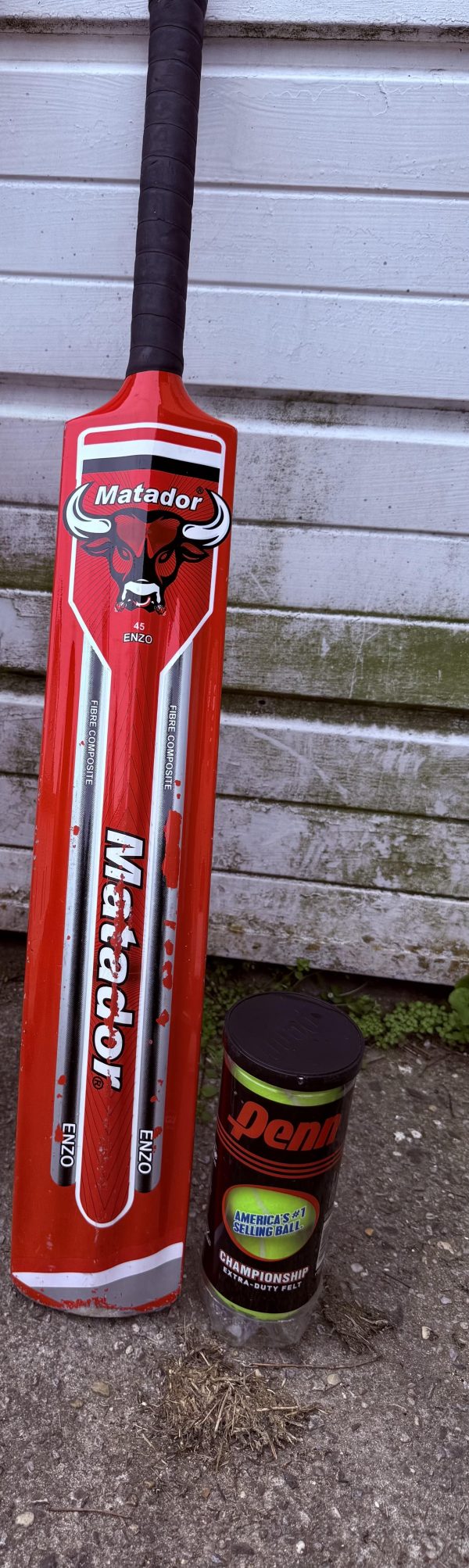
When coming from Trinidad to New York City in early 2001, my dad brought along the most important tool needed to keep his passion alive: his cricket bat. This wooden bat has evolved throughout centuries, dating all the way back to the 17th century in England and it’s swung low to hit a ball. Growing up in a West Indian neighborhood in New York City, cricket was a common sport to me, and I believed it was a globally famous one, like basketball and soccer, that everyone in the world knew and played at least once. However, as I got older and started to become more familiar with New York City as a whole, I realized my childhood community, specifically my father, influenced this way of thinking. 2013 was the first time I held and was taught how to swing a cricket bat by my father. At that age I was shorter than the official bat itself and needed a smaller one, but nonetheless my dad started to pour all the culture of cricket from Trinidad into my mind and hands. This cricket bat, or really the sport of cricket as a whole, puts into focus the impact of Trinidadian immigration and its effect on the New York community, as cricket has become a much more popular sport with many professional leagues in our boroughs. Now, I can stand above the bat and swing just like he taught me to.

The Greatest Fast-Food: Turkish Döner

Gyros, shawarmas, and al pastor tacos. Besides being delicious, what do they all have in common? They are all different variations of the same food: the Turkish döner kebab. The dish consists of seasoned meat in the form of beef/lamb mix or chicken, roasted on a vertical rotating spit device. Döner can be eaten as a sandwich or alongside rice. My parents both ate döners often as children when growing up in Turkey during the 80s and 90s, whether it was a cheap version from a shop off the streets, or a better quality and more expensive version in Turkish restaurants.

My Dad, pictured above in the year 1998 next to a döner device in a Turkish restaurant in Brooklyn, described döner as a “comfort food.” When they immigrated here in the late 1990s, döner became a bridge to Turkish culture for them despite being abroad. For me, growing up in NYC meant eating many different versions of döner: whether it was from an authentic Turkish restaurant in Astoria, a gyro from a Greek food cart, a Berlin-style döner with fresh vegetables and tasty sauces, or as a home-made Iskender kebab (a different Turkish dish with döner meat). All of these foods, while delicious to eat, provide a special connection to me through döner being a cross-cultural food, allowing me to connect my childhood and the döner I eat/ate here to what my parents ate in Turkey.

Threads of Light: From Cairo to New York

The object is a hand-size golden lantern that lights up with batteries. It has a handle at the top and a roof-like top, with a round base and two handles (mostly for decor) on the sides. The lantern was purchased by my mom in NYC. It sits on a medium-sized table within my house, mainly used for guests. Even though it simply looks like a fancy house decoration, it connects me with my culture and memories.

Growing up as an Egyptian, it was normal to see children before sunset running in crowded markets, pushing through adults while holding small lanterns of different shapes and sizes. They’d light up in different colors, not just golden yellow. Most of the time, the lanterns didn’t contain real candles. But they still felt cultural. Children would sing “Ramadan gaana,” and other different songs in anticipation of the month of Ramadan.

Because the small lantern signals Ramadan, it connects me to memories of fasting in Egypt on hot days, especially later in the day when I felt great for making it to the evening, knowing a large feast awaits my family.

This object fits into the broader story of New York City because New York City is a hub of immigrants, of many cultures uniting into one city. This makes New York so much different from other places in America. Being of an Egyptian background, I bring my perspective here, and even meet people from different countries who also celebrate Ramadan.

Proudly powered by WordPress | Theme: Baskerville 2 by Anders Noren.

Up ↑