Kibbe Hamdah

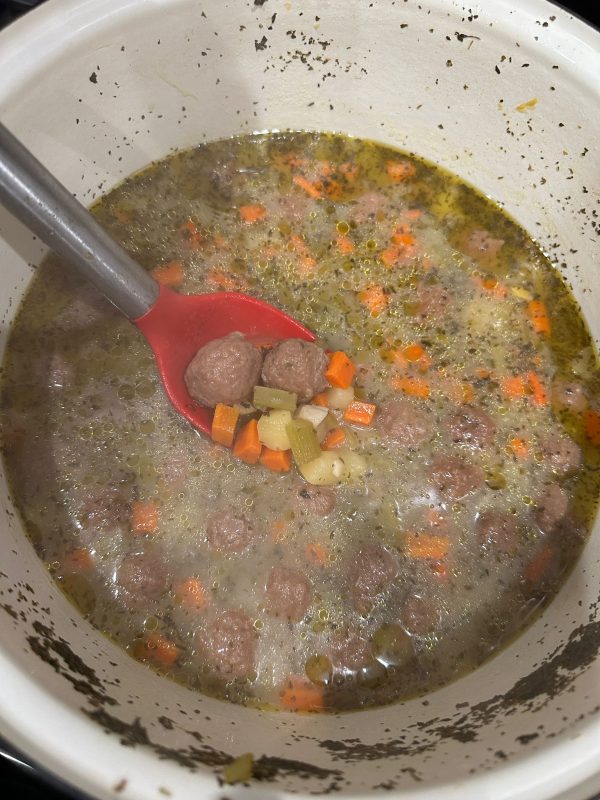
Kibbe Hamdah, also known as Hamid has been a staple dish on my dinner table almost every Friday night for as long as I can remember. It is a Syrian-Jewish dish that my grandma taught my mom to make. The base of the dish is a lemony soup with chopped carrots and celery. Inside the soup there are meatballs stuffed with another type of meat inside. It is often served with white rice. This dish is a staple in almost everyone’s home in my Syrian-Jewish community, and some people even add potatoes or tomato sauce to their soup. It is customary to eat Kibbe Hamdah on the Jewish Sabbath, which begins on Friday, 18 minutes after sunset. Kibbe Hamdah is not just a type of food, it also represents culture and religion. The traditional recipes in my community are very sacred, and they represent who we are. Eating Kibbe Hamdah with my family every week helps me recognize how far my community has come, and appreciate our rich history and culture. When I’m cooking for my family in the future, I know that Kibbe Hamdah will be a weekly staple in my house as well. My mother will pass down the recipe to me, and I will carry out the traditions of my community with pride and excitement. It is very special that even with everyone’s unique recipes, you will almost always find Kibbe Hamdah on their dinner table for the Jewish Sabbath and holidays.

The Cross That Traveled With Us

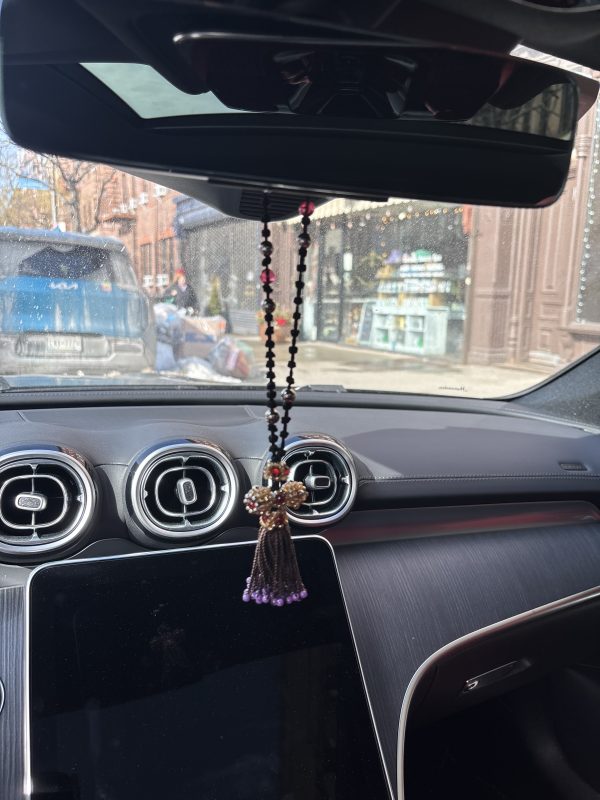
When my mom left Lithuania to start a new life in New York City, she didn’t bring many belongings with her. But she did bring one small object: a beaded cross that now hangs from the rearview mirror in our family’s car. To anyone else, it might look like a simple decoration, but to us it represents protection, memory, and the feeling of being watched over.
My mom grew up surrounded by Catholic and Orthodox traditions, and this cross was something familiar she could hold onto when everything else felt uncertain. When she first arrived in New York, she didn’t know the language, the streets, or the people. Hanging the cross in her car became a quiet ritual that made her feel safer. Over time, it became part of our family’s daily life. Every time we drive, it swings gently with the movement of the car, reminding us of where we come from and the journey that brought us here.
As I’ve gotten older, I’ve realized how much meaning is wrapped up in this small object. It carries my mom’s courage, her faith, and the hope she had when she left home. It also connects me to a larger story shared by many immigrant families who bring pieces of their past with them to feel grounded in a new place. This cross is more than an ornament, it is a symbol of protection, heritage, and the path my family took to build a life in America.

Gold Buddha

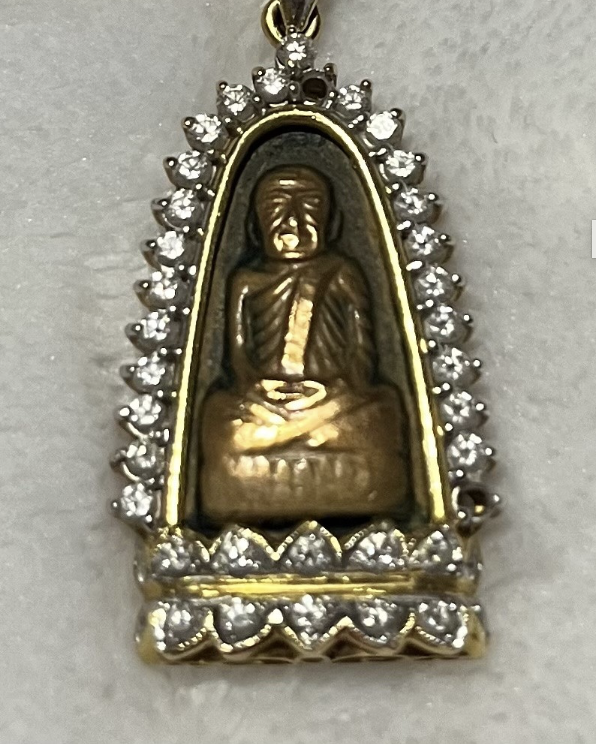
The object I have chosen is my gold and diamond Buddha necklace. It was custom-made in Thailand for me when I was a child. My mom’s side of the family is Thai, and I grew up practicing Buddhism in America. Although, until the age of 10, I went to a private Catholic School, I wore my necklace. Without realizing, it became a reminder of my family’s roots when I was surrounded in a culture around me that wasn’t mine. There’s a specific kind of pressure that comes with growing between two cultures. Do you assimilate to your environment, or stay true to your own beliefs? My Buddha necklace was something I prayed to in times of struggle, when I needed good luck, or when I needed guidance. The reality of never taking off this necklace reflected my family, my culture, my overall morals and character.

Psalms and Self-expression: The Bukharian Jewish Journey

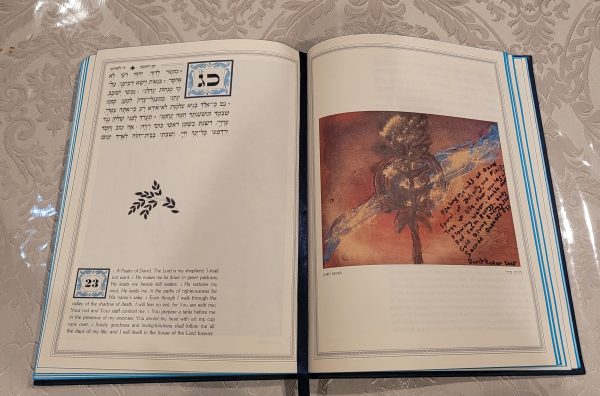
This Book of Psalms was gifted to me by my parents in August of 2018. They were drawn to this contemporary version of the ancient text because it includes different paintings from Jewish artists to match the tone of each Psalm. The Book of Psalms, which Jewish tradition attributes to King David, has been an integral part of Jewish culture for three thousand years. The 150 poems that compose the Psalms reflect diverse themes, such as faith, hardship, and determination. My family is Bukharian Jewish: Jews from Central Asian countries like Uzbekistan. The Book of Psalms has shaped my family’s journey to New York as they escaped the Soviet Union in 1991 and found comfort in the Psalms’ humanity. Chapter 23 of Psalms, which is recited every Sabbath, resonates particularly with Bukharian Jews who immigrated to New York because it contains themes of uncertainty, self-confidence, and belief in God’s protection amid hardship. My object reflects the immigration journeys of Bukharian Jews, who have achieved success despite facing challenges, while maintaining their heritage. To many Bukharian Jews, achieving their dreams and having the freedom for self-expression is the epitome of the American identity. Just as my Book of Psalms contains different pieces of art, Bukharian Jews allowed their creativity to shape their individual paths after immigrating to New York, each embodying their own version of what it means to be an American.

Symbol of Sikhism

The object I chose is my kada, the bracelet I wear on my wrist every day. It might look simple, just a plain silver circle, but it means a lot to me because it represents my religion, Sikhism.

I’ve actually worn it my whole life. Since I was born, I always had one on, and every time I grew out of it, I would get a new one. It’s something I’ve never taken off, literally never. Because of that, it feels like a part of me, not just something I wear.

As I got older, I started to understand its meaning more. It reminds me to stay strong, make good decisions, and stay connected to my values. Even in normal moments, I notice it, and it kind of keeps me grounded. Overall, my kada isn’t just a bracelet; it’s something that’s always been with me and always reminds me of who I am.

Mezuzah

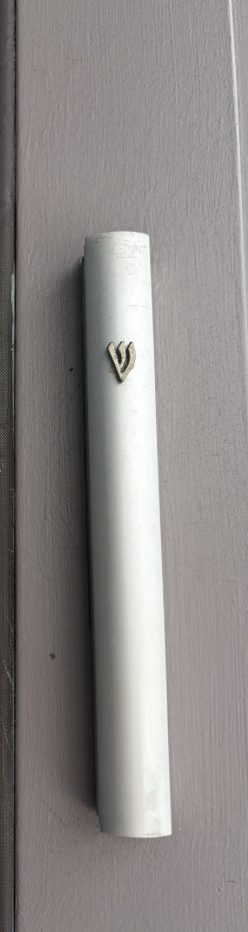
The mezuzah holds a sacred Jewish prayer and is carefully attached to my doorpost, serving as a constant reminder of my family’s faith and identity. Inside it is the Shema, one of the most important prayers in Judaism, which affirms my belief in God and his protection. Each time I pass by, whether entering or leaving, it quietly reinforces a sense of connection to my religion and the values that shape my life.
More than just a ritual object, the mezuzah represents protection. We believe it watches over the household and those within it, offering a spiritual safeguard. At the same time, it designates our home as a Jewish space, marking it with intention and meaning. It is a small but powerful way of expressing identity, not loudly, but with quiet confidence and continuity.
Its straight position on the doorpost is especially significant. While many Jewish families place the mezuzah at an angle, ours reflects the Syrian Jewish tradition that has been passed down for generations. This detail connects me directly to my heritage, honoring the customs of my ancestors. In this way, the mezuzah is not only a religious symbol but also a cultural one, preserving tradition while continuing to shape my sense of belonging in the present.

Friday Night Candlesticks

These are my great grandmother’s candlesticks that my family uses every Friday night to bring in the Sabbath. These candlesticks are important to me because they represent my Jewish religion and identity. In Judaism, lighting candles every Friday night starts the Sabbath, a time to pray, relax, and spend time with family. Every week when we light them, it feels like we are continuing something that has been done for generations.
What makes these candlesticks even more meaningful is my grandmother’s story after she received them from her mother. She immigrated from Iran to Israel due to religious persecution, which was a huge change in her life. Even when she was forced to leave her home, she kept her traditions, and these candlesticks are a symbol of that. When she gave them to my mom, her eldest daughter, she was passing down her religion, culture, and personal history.
Now, my family uses the same candlesticks and it makes me feel connected to where I came from. It’s like a reminder of my grandmother and everything she went through. It also shows how important religion is in shaping identity, especially in Jewish families where traditions are such a big part of life.
These candlesticks aren’t just an object, they represent my family’s past, our beliefs, and how we stay connected to our roots. They also remind me that even as life changes, our traditions and identity can stay strong and continue to guide us every day.

Proudly powered by WordPress | Theme: Baskerville 2 by Anders Noren.

Up ↑