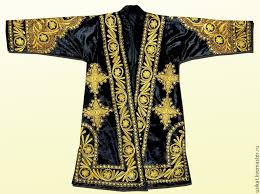
My object is a traditional Uzbek Chapan that has been in my family for almost one hundred
years. A Chapan looks like a long robe and people wear it as a top layer for warmth and
protection. It is made from cotton and covered with colorful patterns and detailed stitching. In
older Central Asian society, a man’s Chapan showed status. The more colorful and intricate it
looked, the more wealth and respect his family held. Today, people still wear chapans during
ceremonies and important celebrations. Wearing one during these events shows respect for
tradition and for family heritage.
I first learned about chapans during my first trip to Uzbekistan when I was twelve years old. After
returning home, I learned that my own family had one passed down through generations. The
men in my family wore it, most recently my grandfather and now it will pass down to me.
This Chapan matters to me because it connects me with my family’s past. Its patterns and
colors reflect the life my family lived in the old world before coming to America. When I look at it,
I think about my grandfather and the generations before him and learning about it helped me
feel more connected to my family history.
This object also tells a larger story. A Chapan shows family history and cultural identity in
Central Asian culture. Clothing like this represents respect, heritage, and social status. Objects
like this pass traditions from one generation to the next and keep family stories alive. My
Chapan also represents immigrant heritage in the United States and it shows how families keep
their traditions after moving across the world. Chapans have existed for centuries in Uzbekistan
and across Central Asia, connecting modern families to older societies and traditions.

