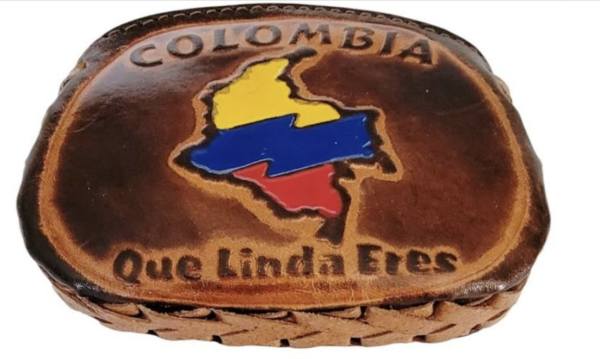
As humans we often assign personal value to objects and my parents were no exception. When my parents migrated from Colombia in 2011, they packed their whole life into one overfilled suitcase and when it could hold no more, they carried essentials in their hands and pockets. One of these essentials was a coin purse. This coin purse was a carefully hand crafted small brown leather coin purse stamped with “Colombia” and the colors of the Colombian flag. To many, it might have seemed like a simple coin purse passing by, but to my parents, it represented the love and pride they had for their country. Despite this, what we love is not always what is best for us. This is why my parents felt forced to leave due to the increasing violence in Colombia associated with the Colombian armed conflict, as well as the economic difficulties that persisted from the early 1980s through the 2000s. They were in search of safety and opportunity. My parents were lucky enough to find that in New York where they were uplifted by their Colombian community in Jamaica, Queens. Over time, the coin purse was passed down to me. Now every time I hold it I am reminded that the coin purse carries more than just physical currency but also cultural currency and it represents a story that didn’t end with my parents, but continues through me.
Authentically Faux Pearls
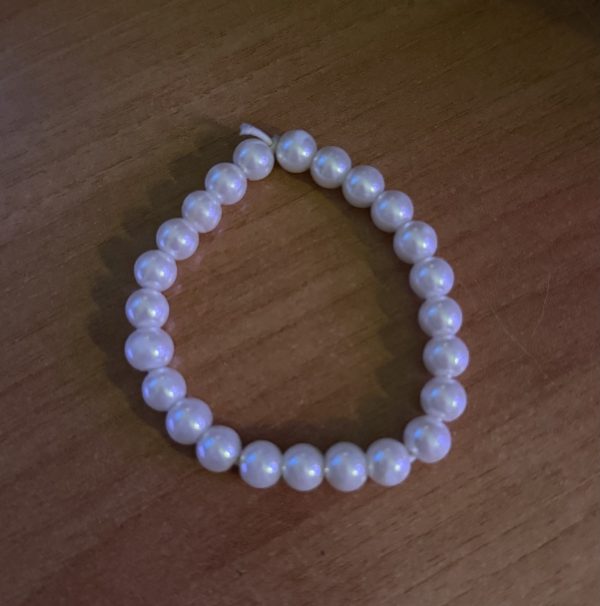
Throughout my life, asking questions about my family’s history within Asia has proved futile. My ancestors arrived in China from Korea multiple generations ago, yet fragments of the past were never passed down and instead were lost. However, during a visit to China in the summer of 2025, my paternal grandmother gifted me a tangible reminder of my family’s muddled history, a faux pearl bracelet. This bracelet, though cheap, has become a priceless symbol of connection. It carries the weight of my family’s migration from South Korea to China, and my maternal grandparents’ and parents’ eventual departure from their homes to live in the United States in the 2000s. My family chose to continue this pattern of migration, cultivating new and better lives for themselves, settling in the Asian-dominated community of Flushing, NYC. Having the privilege of living in the United States, I am constantly reminded of the sacrifices that had to be made for me to lead a more stable life. These reminders fostered a deep desire to situate my family’s unique journey within the broader history of Korean migration and displacement. I have come to understand that 20th-century mass migration from Korea was driven by survival and shaped by multiple instances of wartime and political instability. With this, my simple faux pearl bracelet has come to represent the struggles and resilience of countless Korean migrants, including my family.
Russian-Soviet-Jewish-New-Yorkian-American-Parisian Tea Culture
Every night after dinner, my mom asks me a one-word question: “Tea?” After I nod my answer, she pulls out two teacups, two saucers, and a teapot from the cabinet behind her. In the teapot, she prepares zavarka, a concentrated form of tea, using black tea, named Paris, which I bought from a company based in SoHo. Over tea, she tells stories about her home country, Moldova, and adjustment to NYC. In 1993, my mom and her family immigrated to NYC from Moldova, along with the 35,900 other Jews emigrating from the former Soviet Union. After 1970, the largest wave of Jewish immigration since the 1920s occurred, and one of the largest locations of settlement was NYC. Migration was influenced in part by war breaking out when Transdniestria, now considered a region in Moldova, declared independence from Moldova. This region was composed mostly of the minorities of Moldova’s population, and Moldova refused to recognize it. When she escaped this situation as a refugee to NYC, my mom was one of many Soviet-Jewish women married early. She received one of the most common Soviet wedding gifts: a tea set. This set now stands in a cabinet in my mom’s kitchen, displayed as a reminder of her Soviet roots, but when used with American tea and her American daughter, the tea set reminds my mom of her adjustment to a new home.
Fruit Blender
The object I chose is a fruit blender that sits on the kitchen counter in my house. Every morning,
my mom uses it to make smoothies for our entire family before we start the day. The blender
itself is nothing special, it’s just a plastic pitcher attached to a VERY loud motor. I am convinced
she uses it to wake us all up in the morning as well. My mom fills it with frozen berries, bananas,
yogurt, and sometimes honey and blends everything together into a thick drink that we can
enjoy. My grandmother always tells us that it gets the bowels moving in the morning.
When my parents were growing up in Hungary, one of the dishes they often ate during the
summer was something called gyümölcsleves, which directly translates to “fruit soup.” It is a
chilled soup made from fruits like cherries, berries, or peaches, usually mixed with cream or
yogurt and served cold. It is super refreshing and made with ingredients that are easy to find
locally.
When my family immigrated, their routines changed. The fruit soup had to be substituted by
smoothies made in a blender because it was quicker and easier for mornings before work and
school. Even though the dish changed form, the idea stayed the same. The blender always
reminds me how traditions from one place can adapt to life in another while still preserving
where a family comes from.
Central Asian Manti
Manti are steamed dumplings that are common in many Asian cuisines including Uzbek, Turkish, and Afghan. In central Asia, they are usually made from thin dough filled with finely minced beef or lamb, onions, and spices. The dumplings are folded using special techniques and cooked in steamers. In different cultures, they have different wrapping techniques, but the basic idea is the same: A dumpling that brings people together around a table.
In my family, Manti represent a connection to my background. Preparing them takes time and is usually done together with my family. My sister makes the dough from scratch while my dad minces the meat and onions. Later, my mom rolls the dough, I fill them, and my dad wraps them. Because the process is slow and requires many hands, cooking Manti becomes a social activity where we talk, share stories, and spend time together. For me, Manti are more than just food. They remind me of where my family comes from and the traditions that have been passed down across generations even though we live in New York today.
Many immigrant families in the United States maintain traditions through food by making them with their families at home or opening restaurants. Dishes like Manti show how cultural identity can continue even after people move to new places, becoming part of the diverse food culture of cities like New York.
Kibbe Hamdah
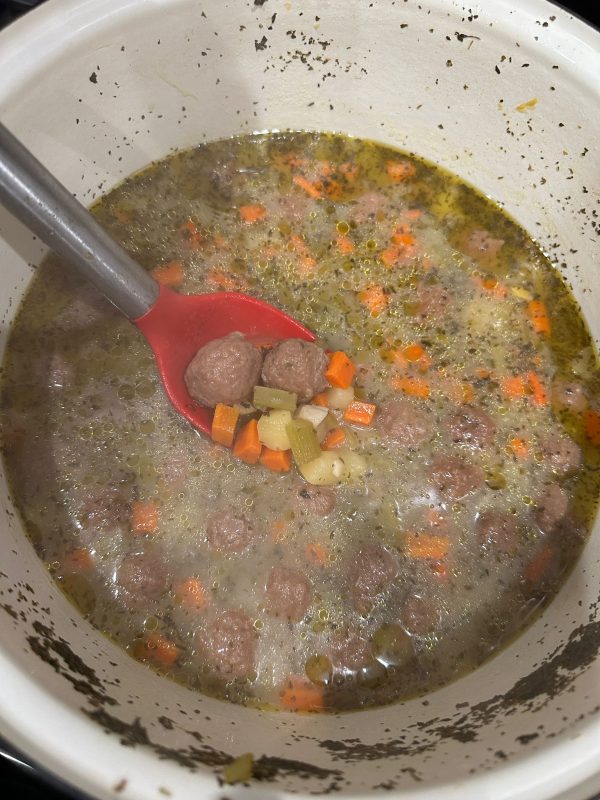
Kibbe Hamdah, also known as Hamid has been a staple dish on my dinner table almost every Friday night for as long as I can remember. It is a Syrian-Jewish dish that my grandma taught my mom to make. The base of the dish is a lemony soup with chopped carrots and celery. Inside the soup there are meatballs stuffed with another type of meat inside. It is often served with white rice. This dish is a staple in almost everyone’s home in my Syrian-Jewish community, and some people even add potatoes or tomato sauce to their soup. It is customary to eat Kibbe Hamdah on the Jewish Sabbath, which begins on Friday, 18 minutes after sunset. Kibbe Hamdah is not just a type of food, it also represents culture and religion. The traditional recipes in my community are very sacred, and they represent who we are. Eating Kibbe Hamdah with my family every week helps me recognize how far my community has come, and appreciate our rich history and culture. When I’m cooking for my family in the future, I know that Kibbe Hamdah will be a weekly staple in my house as well. My mother will pass down the recipe to me, and I will carry out the traditions of my community with pride and excitement. It is very special that even with everyone’s unique recipes, you will almost always find Kibbe Hamdah on their dinner table for the Jewish Sabbath and holidays.
Celebrating Christmas at Home and Across the Country
My family has always valued celebrating the holidays together. Every Christmas Eve, my whole family, including my cousins, aunts, uncles, in-laws, and even plus ones, come together and have a big dinner followed by dessert and games and presents. Every year, a different family hosts. It rotates between my house and my two aunt’s houses. We start from dinnertime till late after midnight. Everyone spends the day cooking, baking, or working, then we all hangout together at night. By the end of the night, people are dropping like flies and falling asleep on any couch in sight. This tradition may have only started a few years ago, but it has quickly become something I look forward to every year. It’s a way for everyone to come together and create special memories during the holidays, which can be when you need company the most.
Not only am I lucky enough to spend Christmas with my family in the United States, but I also get to spend it with my family in the Philippines. My parents immigrated from the Philippines when they were young, and slowly all my father’s side came to America too, but minus my mother, her family is all still in the Philippines. Shortly before we started this holiday tradition, one of my family members sent us a traditional, star-shaped Filipino Christmas lantern called a parol. The lantern symbolizes hope, faith, and the triumph of light. Ever since we received this gift, we put it up in the windows, turn it on, and let it light up the house. Having this lantern makes it feel like my family in the Philippines is celebrating with us. Whether it’s in my house or from across the country, I will always feel my whole family’s love during the holidays.
– HC
Persian Kabab
Kabab is a Persian dish eaten in Persian households and restaurants, as well as at family gatherings and celebrations. It has been a central Persian dish for almost 2,000 years, made with ground beef, grated onions, and turmeric placed on skewers and grilled. The dish is commonly accompanied with basmati rice and sumac and a grilled tomato. Kabab is unique as its preparation is communal; in family barbecues, we each work together to get the ground meat, onions, and spices ready, to put beef on the skewers, and to grill. Making cultural dishes is one of the central ways that my family and other Persian immigrant families keep our cultures and traditions alive in our new homes. For American immigrants as a whole, making traditional foods is one of the key ways of maintaining a tangible hold on our cultures and heritages, even when we are not in our homelands. Persian immigration to the United States has dramatically increased following regime change in Iran, with my parents leaving Iran in the late 1980s, and these cultural traditions and dishes always remind us of our family members still in Iran and all we had left behind. Our hearts are in Iran and the war brings pain and sadness to us constantly. We hope that the people of Iran will soon live in freedom and that the people of Iran will continue to flourish as they have for millennia.
Threads of Light: From Cairo to New York
The object is a hand-size golden lantern that lights up with batteries. It has a handle at the top and a roof-like top, with a round base and two handles (mostly for decor) on the sides. The lantern was purchased by my mom in NYC. It sits on a medium-sized table within my house, mainly used for guests. Even though it simply looks like a fancy house decoration, it connects me with my culture and memories.
Growing up as an Egyptian, it was normal to see children before sunset running in crowded markets, pushing through adults while holding small lanterns of different shapes and sizes. They’d light up in different colors, not just golden yellow. Most of the time, the lanterns didn’t contain real candles. But they still felt cultural. Children would sing “Ramadan gaana,” and other different songs in anticipation of the month of Ramadan.
Because the small lantern signals Ramadan, it connects me to memories of fasting in Egypt on hot days, especially later in the day when I felt great for making it to the evening, knowing a large feast awaits my family.
This object fits into the broader story of New York City because New York City is a hub of immigrants, of many cultures uniting into one city. This makes New York so much different from other places in America. Being of an Egyptian background, I bring my perspective here, and even meet people from different countries who also celebrate Ramadan.
Gold Buddha
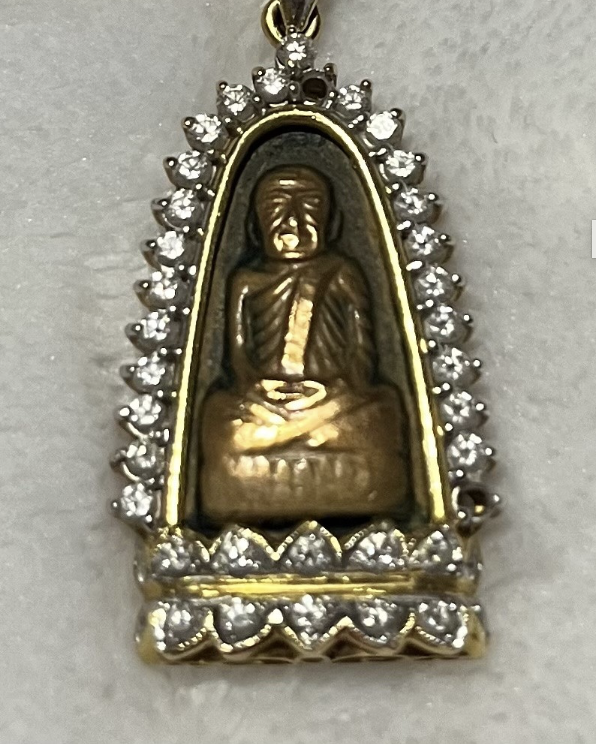
The object I have chosen is my gold and diamond Buddha necklace. It was custom-made in Thailand for me when I was a child. My mom’s side of the family is Thai, and I grew up practicing Buddhism in America. Although, until the age of 10, I went to a private Catholic School, I wore my necklace. Without realizing, it became a reminder of my family’s roots when I was surrounded in a culture around me that wasn’t mine. There’s a specific kind of pressure that comes with growing between two cultures. Do you assimilate to your environment, or stay true to your own beliefs? My Buddha necklace was something I prayed to in times of struggle, when I needed good luck, or when I needed guidance. The reality of never taking off this necklace reflected my family, my culture, my overall morals and character.
Canadian Gold Sapphire Earrings
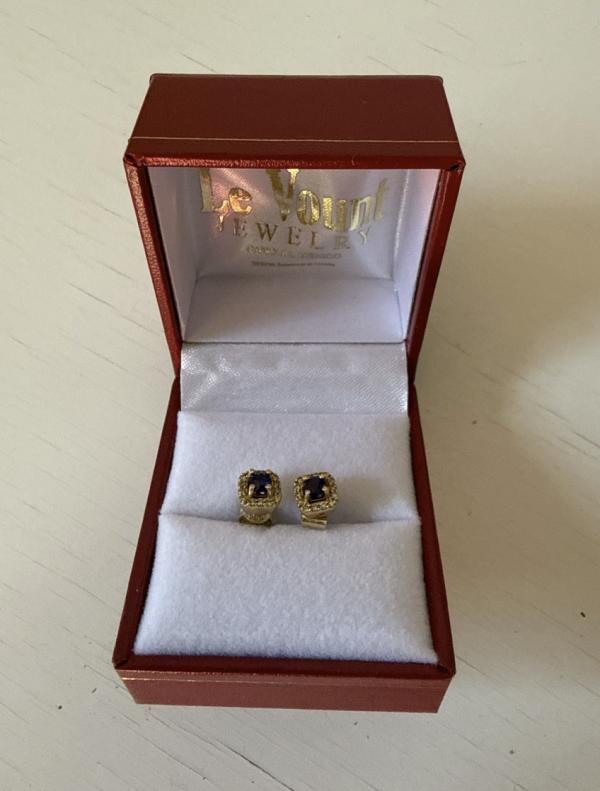
On the last day of a trip to Mexico for my eighteenth birthday, my father told me to go
into a store and pick something out. There were two stores at the hotel: a souvenir shop and a
jewelry store. He meant the souvenir shop, but I misunderstood and walked into the jewelry store
instead. Inside, I found a pair of earrings I liked, but they were expensive, so I waited for my
father before deciding.
When he saw the price tag, I could tell they were more than he expected. Instead of
saying no, he suggested we go to dinner and come back later. At dinner he told me how proud he
was of me and how much he loved me. When we returned, the woman working there showed me
another pair she thought would look nice. As I kept looking, I noticed Canadian gold sapphire
earrings and instantly knew those were the ones I loved. But they were more expensive than the
first pair and the other pair combined, so I didn’t bother asking.
Even knowing that, my father bought all three.
Those sapphire earrings mean far more to me than jewelry. My parents immigrated to this
country with almost nothing. Everything they built came from sacrifice and hard work. When I
look at those earrings, I see how far my family has come and feel motivated to expand the
success my parents fought to create.
Uzbek Qozon
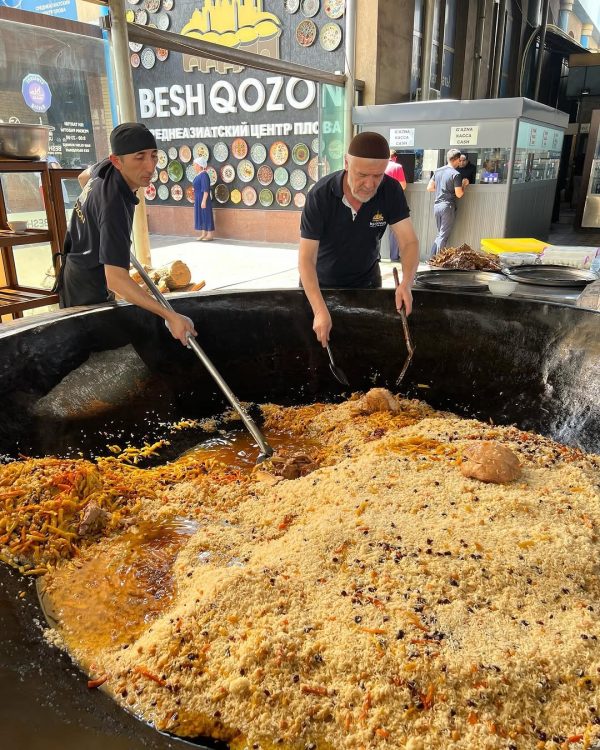
My grandmother has a qozon that looked like the one in the image, only much smaller. It was old and well-used. This is the qozon that made the food that my mom was raised on throughout her entire childhood. This is the qozon that made the food I was raised on during my childhood. It’s not a cooking utensil or a tool; at this point it’s an heirloom. It’s older than I am. It’s probably older than my mom. Its provenance, at least as far back as I can trace it, begins with my grandfather’s mother, who then passed it on to him. Being a stereotypical Uzbek man and not knowing how to cook, he gave it to his wife (my grandmother). My mom hopes to inherit it one day.
It’s funny just how much of Uzbek culture can be explained by this. Uzbek dishes are efficient: large and calorie-dense, a leftover (see what I did there?) from our nomadic days when little could be preserved and even less could be carried on the backs of horses. Because of this, Uzbeks traditionally have no concept of leftovers. My grandmother would cook three meals a day, every single day, each one big enough to fill this qozon to near-overflowing. The qozon is perfectly hemispherical, so an Uzbek kapkir (spatula) can very efficiently stir the food and scoop it out onto the plates of my grandmother’s four children. The pure cast iron gets hot and stays hot, and the material only gets stronger over time as it polymerizes with every use, preserving itself for future generations.
The second image is an example of a qozon used in communal cooking. These huge qozons are called “forty-ears” because they traditionally had forty handles, called ears, around the rim, and it would take forty men to carry them, one for each ear. There are restaurants in Uzbekistan that specialize only in one dish, osh, the national dish of Uzbekistan. The restaurant Besh Qozon makes portions of osh that weigh 350 kilograms (771 pounds).
I’ve had to describe it so many times, and each time I’m left underwhelmed because it’s impossible to experience it adequately (let alone authentically) unless you see it being made in front of your very eyes. It consists of Uzbek rice (not basmati or jasmine), julienned orange and yellow carrots, beef or lamb, spices, and toppings like whole peppercorns, raisins, quail eggs, stuffed grape leaves, whole garlic heads, or even quince. All of the toppings are not used at once; quince and garlic do not go well together. My favorite is fried in linseed oil, but the fanciest osh is made with dumba, the fat of a special type of ram only found in Central Asia.
Because osh comes in so many different forms, it is used in every aspect of Uzbek life: regular ol’ osh at home, fancier osh at restaurants and celebrations, and even fancier to’y oshi for weddings. The wedding, being the most important event in Uzbek culture, naturally gets the fanciest osh with all of the toppings. At the most old-fashioned of weddings, a ram and a big qozon are brought to the home of the bride. I think you can see where this is going. A butcher is called, the ram slaughtered, and some of the male relatives of the bride cook osh for the wedding. These days, things have become a bit more modernized. To’ylar (weddings) are usually held in to’yxonalar (wedding-houses), huge event halls specifically made for Uzbek weddings, which include 500 people on average.
From to’ylar to dumba to paxta-gul to osh, the qozon truly connects every facet of Uzbek culture together.
More than a Scarf
“Come on, Baba. We’re almost late for the prayer at the masjid,” I exclaim.
He responded: “Give me a second. I’m going to get our ajraks.”
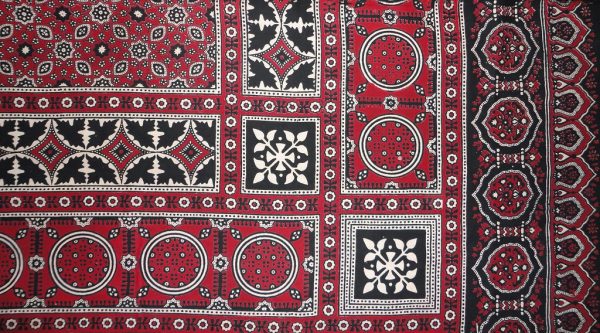
My father has always taken great pride in our culture as Pakistani-Americans living in what he called the greatest city of the world. Regardless if we have to run to the mosque to attend the Eid prayer on time, Baba emphasized the importance of carrying the ajrak with us whenever we go. The ajrak is a cultural scarf embroidered with all sorts of geometric and kaleidoscopic images. Yet to my dad, it was more than a mere piece of clothing worn around the neck. It was one of the only tangible links in his possession that connected him to his village in Sindh, Pakistan which was over 7,000 miles away.
His passion eventually became my own as I started wearing the ajrak for my high school’s cultural events and festivities. I was proud to display the culture that my parents carried with them from Pakistan and wanted to share it with others, telling them of the ajrak’s history and its familial significance. It was small moments like these that reaffirmed to me why my father dedicated himself to preserving his culture abroad. No matter where I am in the world, as long as I have the ajrak, I will always have a piece of my home with me.
Calabash
The calabash is a versatile and culturally significant plant that has been cultivated for thousands of years across Africa, Asia, and the Americas. Belonging to the gourd family, the calabash plant produces large, hard-shelled fruits that can be used both as food and as containers. When young, the fruit is edible and often cooked like a vegetable, providing a source of nutrition in many traditional diets. Once matured and dried, the hard shell becomes a durable material that has been used for centuries to make bowls, cups, musical instruments, and even utensils. This dual-purpose nature of the calabash has made it an essential part of daily life in many cultures.
In addition to its practical uses, the calabash carries symbolic and cultural meaning. In West Africa, calabash gourds are often intricately decorated and used in ceremonies or as gifts. Musicians in various African and Caribbean communities use calabash shells to create instruments such as the shekere, which produces rhythmic sounds essential to traditional music. In Latin American cultures, the dried calabash is used to make containers for mate tea, highlighting its continued role in everyday life. The plant also appears in folklore and storytelling, often representing abundance, creativity, and resourcefulness.
Calabash also has a personal significance in my family. My dad is from Jamaica, and when I was born, my grandmother, his mother sent up a bowl made from a dried calabash and told my dad to feed me from it, with porridge, cereal, or fruits. She said it was so I could learn to talk faster. Once I learned how to speak, I didn’t use it anymore, but that wasn’t the end of the story. My younger sister later began using the calabash, and, as you might expect, she learned to speak faster than I did. This family tradition shows how the calabash is not only a practical object but also a symbol of heritage and cultural continuity.
Beyond its cultural and personal significance, the calabash is environmentally sustainable. It grows quickly, requires minimal care, and can thrive in diverse climates, making it a reliable source of food and material for local communities. Its adaptability and multi-functionality illustrate the ingenuity of human societies in utilizing natural resources. Overall, the calabash is much more than a simple plant; it’s a symbol of tradition, utility, and identity that continues to impact lives worldwide.
Great Grandmother’s Cast Iron Skillet
The cast iron skillet has a long history of migration. The cast iron has its origins in China as early as the 5th century B.C.E. and only began to be imported to Europe in the 14th century C.E. on the trade networks of the Silk Road. During the industrial revolution in Europe and the United States from the 18th and 19th centuries C.E., cast iron cookware became a relatively cheap and incredibly sustainable way to feed families. For many enslaved African American domestic cooks or kitchen laborers, the cast iron skillet became a tool of both oppression and survival used daily. During the Great Migration, these durable appliances were one of the few items that these families could bring with them and impart onto their descendants.
I started my cooking journey in 2023 in my junior year of high school with a longer history of baking stretching back to middle school. Since my first semester of classes at City College last summer my cooking skills have been developing rapidly because I began cooking lunch for myself as often as I could. I feel confident with the oven, stovetop pots, instant pressure pot, and toaster oven we have but the one tool I feel disquieted to even begin using is our cast iron skillets. My family has few heirlooms in our apartment, and our one inherited cast iron skillet is perhaps our most cherished. One of the skillets belonged to my father’s grandmother, and where she got it I don’t know. She was born in 1920 in Maryland and went on to move to West Virginia and raise six of her own children and helped bring up my father and his sister there. Their cousins would also frequent the house growing up, and she often fed up to seven children off of soul food from the two cast iron skillets she had – the one I have today and another deep-dished skillet that’s still in West Virginia. As an African American family growing up in a 96% white state, some of the memories that still bring the most joy in the people she raised and loved is the food she cooked in those skillets in the challenging times of Jim Crow civil rights struggles that they all endured.
When my father traveled from New York back to West Virginia to attend her funeral in 2002, the only thing he physically took back with him was one of her cast iron skillets.
Today her cast iron skillet rests proudly on our stovetop, too emotionally significant to be pushed into the oven with our other pots and trays. My father’s grandmother handled her two cast iron skillets with great care and love for years of her life, and I don’t even know how to season or clean them. My apprehension to use her skillet is out of respect for all she’s done and fear of underwhelming or disappointing her legacy. But I suppose the first step in treating her skillet properly is to practice upkeep and preservation of it.
Psalms and Self-expression: The Bukharian Jewish Journey
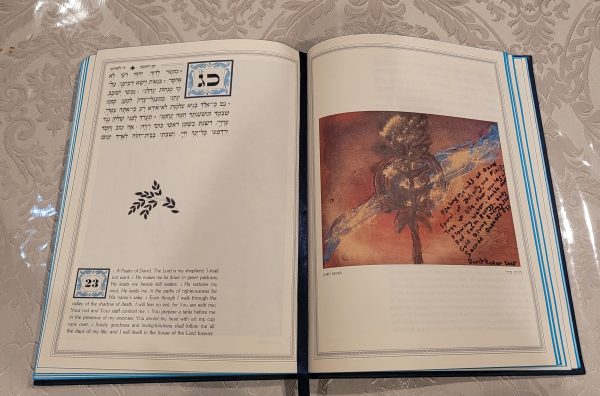
This Book of Psalms was gifted to me by my parents in August of 2018. They were drawn to this contemporary version of the ancient text because it includes different paintings from Jewish artists to match the tone of each Psalm. The Book of Psalms, which Jewish tradition attributes to King David, has been an integral part of Jewish culture for three thousand years. The 150 poems that compose the Psalms reflect diverse themes, such as faith, hardship, and determination. My family is Bukharian Jewish: Jews from Central Asian countries like Uzbekistan. The Book of Psalms has shaped my family’s journey to New York as they escaped the Soviet Union in 1991 and found comfort in the Psalms’ humanity. Chapter 23 of Psalms, which is recited every Sabbath, resonates particularly with Bukharian Jews who immigrated to New York because it contains themes of uncertainty, self-confidence, and belief in God’s protection amid hardship. My object reflects the immigration journeys of Bukharian Jews, who have achieved success despite facing challenges, while maintaining their heritage. To many Bukharian Jews, achieving their dreams and having the freedom for self-expression is the epitome of the American identity. Just as my Book of Psalms contains different pieces of art, Bukharian Jews allowed their creativity to shape their individual paths after immigrating to New York, each embodying their own version of what it means to be an American.
Muchnick Family History
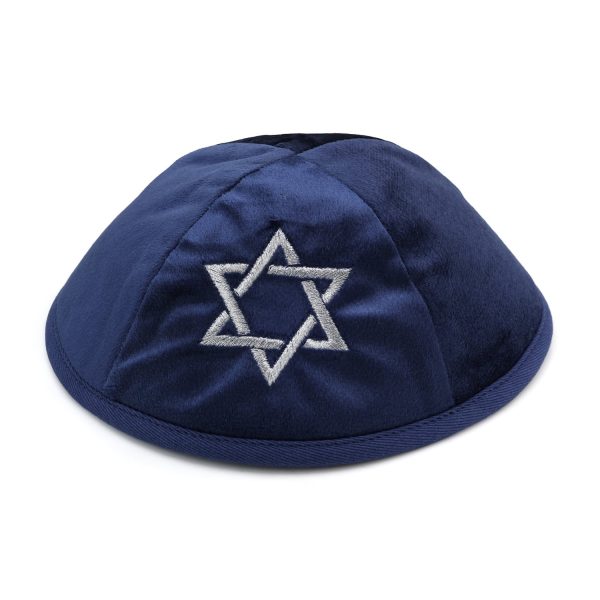
My family’s story is one of migration, survival, and identity, shaped by the waves of immigration that built New York. On my mother’s side, my grandparents are first-generation Holocaust survivors: my grandmother came from Kisvárda, Hungary, a small town whose once-thriving Jewish community was nearly wiped out during the Holocaust, and my grandfather came from Soviet Ukraine. In 1977, feeling there was no future for Jews in Europe, they immigrated to America and settled in Mill Basin, Brooklyn, among other immigrants with similar stories. On my father’s side, the family was already rooted in America, settling on Long Island in Nassau County, though the connections to Europe were never far away—my great-grandmother survived the Holocaust in Hungary before making her way here, and my great-grandfather served in the U.S. Army during World War II, leading a post-war interrogation unit. What carried over from the old world was less about language, since my grandparents speak fluent Hungarian and Russian but never taught it to me, and more about a deep sense of Jewish identity. If I had to choose one object to represent my family, it would be a kippah—small, simple, but carrying everything. My family left Europe because they were Jewish, survived because they held onto who they were, and rebuilt in Brooklyn and Long Island because New York gave them a fresh start. Their story connects directly to the Jewish experience on the Lower East Side and the broader history of immigrant New York.
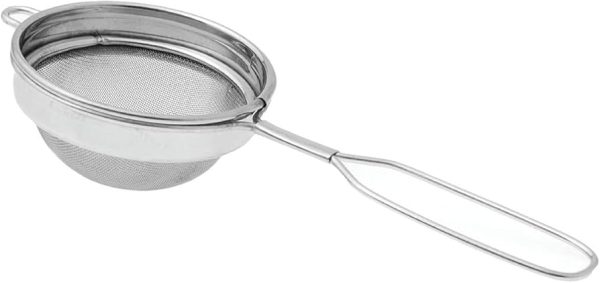
Chai Strainer
From a small village in India to our home in New York, my family’s chai making tradition tells a story of heritage, migration, and cultural influence. This drink originated in India, where it was consumed for thousands of years as a spiced tea known as “Masala Chai.” Blending traditional black tea with spices such as cardamom, cinnamon, ginger, and cloves, mixed with milk and a sweetener. It became widely popular during British colonial rule when tea production expanded, and Indians adapted it with their own flavors. Later, it became popular in the United States as “Chai Tea”, translating to “Tea Tea”.
In my household, my parents and grandparents make chai at all times of the day. It’s their comfort drink, made for one another with care and for guests who enter their home. Representing hospitality and togetherness. When my grandparents emigrated from Kerala, India, in 1976, they brought with them several sets of strainers from their local appliance store. They firmly believe these are the best strainers and we can’t use any other type. After moving to New York, my family continues to make chai the same way, preserving every detail of the tradition without changing a single thing. My family’s chai, which started as a meaningful tradition, grew into something widely appreciated today in the United States. This illustrates how immigration continuously enriches and reshapes American identity.
Photograph of Family Members in the Catskills, c. 1966
My object is a photograph of my grandmother and her siblings in the Catskills, taken in or around 1966. In the photograph, my grandmother is around 12 years old. My grandmother died from cancer when my father was a teenager, and thus I have never met her. She had eight children, and when her children had daughters, they named them after my grandmother. I often joke that I can know the birth order of my cousins based on what their names are, since if one of them has my grandmother’s name, I know for certain that she is the oldest daughter. Since my grandmother died long before I was born, I have very little tangible connections with her, especially since neither my father nor his siblings tend to speak much about who my grandmother was as a person. This photograph of her is one of the few objects I have that allow me to connect with my grandmother, and see her as a real person rather than as a character that occasionally appears in discussions with family members.
Mezuzah
The mezuzah holds a sacred Jewish prayer and is carefully attached to my doorpost, serving as a constant reminder of my family’s faith and identity. Inside it is the Shema, one of the most important prayers in Judaism, which affirms my belief in God and his protection. Each time I pass by, whether entering or leaving, it quietly reinforces a sense of connection to my religion and the values that shape my life.
More than just a ritual object, the mezuzah represents protection. We believe it watches over the household and those within it, offering a spiritual safeguard. At the same time, it designates our home as a Jewish space, marking it with intention and meaning. It is a small but powerful way of expressing identity, not loudly, but with quiet confidence and continuity.
Its straight position on the doorpost is especially significant. While many Jewish families place the mezuzah at an angle, ours reflects the Syrian Jewish tradition that has been passed down for generations. This detail connects me directly to my heritage, honoring the customs of my ancestors. In this way, the mezuzah is not only a religious symbol but also a cultural one, preserving tradition while continuing to shape my sense of belonging in the present.