These are my great grandmother’s candlesticks that my family uses every Friday night to bring in the Sabbath. These candlesticks are important to me because they represent my Jewish religion and identity. In Judaism, lighting candles every Friday night starts the Sabbath, a time to pray, relax, and spend time with family. Every week when we light them, it feels like we are continuing something that has been done for generations.
What makes these candlesticks even more meaningful is my grandmother’s story after she received them from her mother. She immigrated from Iran to Israel due to religious persecution, which was a huge change in her life. Even when she was forced to leave her home, she kept her traditions, and these candlesticks are a symbol of that. When she gave them to my mom, her eldest daughter, she was passing down her religion, culture, and personal history.
Now, my family uses the same candlesticks and it makes me feel connected to where I came from. It’s like a reminder of my grandmother and everything she went through. It also shows how important religion is in shaping identity, especially in Jewish families where traditions are such a big part of life.
These candlesticks aren’t just an object, they represent my family’s past, our beliefs, and how we stay connected to our roots. They also remind me that even as life changes, our traditions and identity can stay strong and continue to guide us every day.
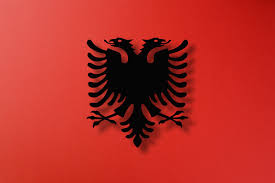
Albanian Shqiponja
The double headed eagle on the Albanian flag, the Albanian Shqiponja means a lot to both me and my family. As my parents immigrated to the city, it was hard maintaining their Albanian tradition when they were trying so hard to fit into
“New Yorkian” culture. Yet even as they adapted to a new way of life, the Shqiponja remained a constant—stitched into old clothing, hanging quietly on the wall, or spoken about in stories that carried pieces of home across the ocean. It became more than just a symbol; it was a reminder of where we came from, a reminder of resilience, pride, and identity. Growing up, I came to the realization that it wasn’t really about choosing one world over the other, but more importantly learning how to carry and embrace both. The same way the two eagles face two directions, my family learned to look forward while never losing sight of the past.
A Vietnamese Family’s Hotpot
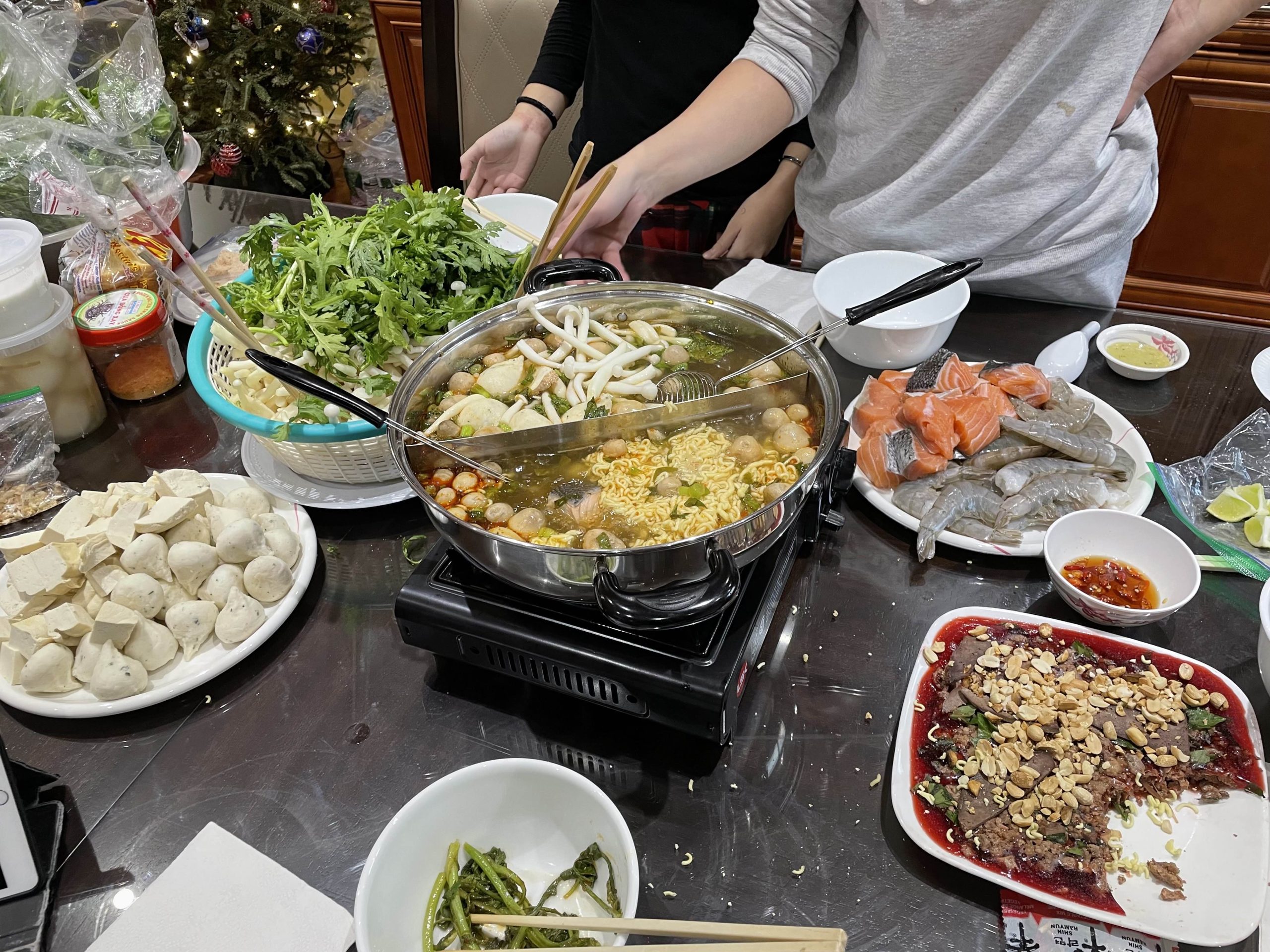
My family doesn’t have many grand objects from our Vietnamese heritage. And of those we do own, I don’t have much personal attachment to them. However, something that I’ve grown up with that I do adore is the Hotpot we always use for big dinners. I don’t know when we got it, all I know is that this pot has been in our family for as long as I can remember. Whenever we have a large group of people, usually family from out of state, we always use this for dinner. This picture is actually from Christmas dinner 2024.
The reason this pot means so much to me specifically is because of how many memories of mine revolve around this piece of cookware. Hotpot always leads to lighthearted conversations, a delicious meal, and patiently waiting for our food to finish cooking. The food each person chooses to cook and eat always reflects who they are. I remember that this specific night was when I tried fish roe dumplings for the first time and fell in love. In fact, part of the reason I’m in college is because of this pot as I actually wrote my college essay on it.
Whenever I go into storage to grab the pot, every memory of the fun and laughter it’s brought to my family comes flooding back. It may not be as glamorous as a piece of jewelry or as grandiose as a family heirloom, but our Hotpot has brought my family a sense of joy that just can’t be recreated.
Bánh bèo & Bánh bột lọc
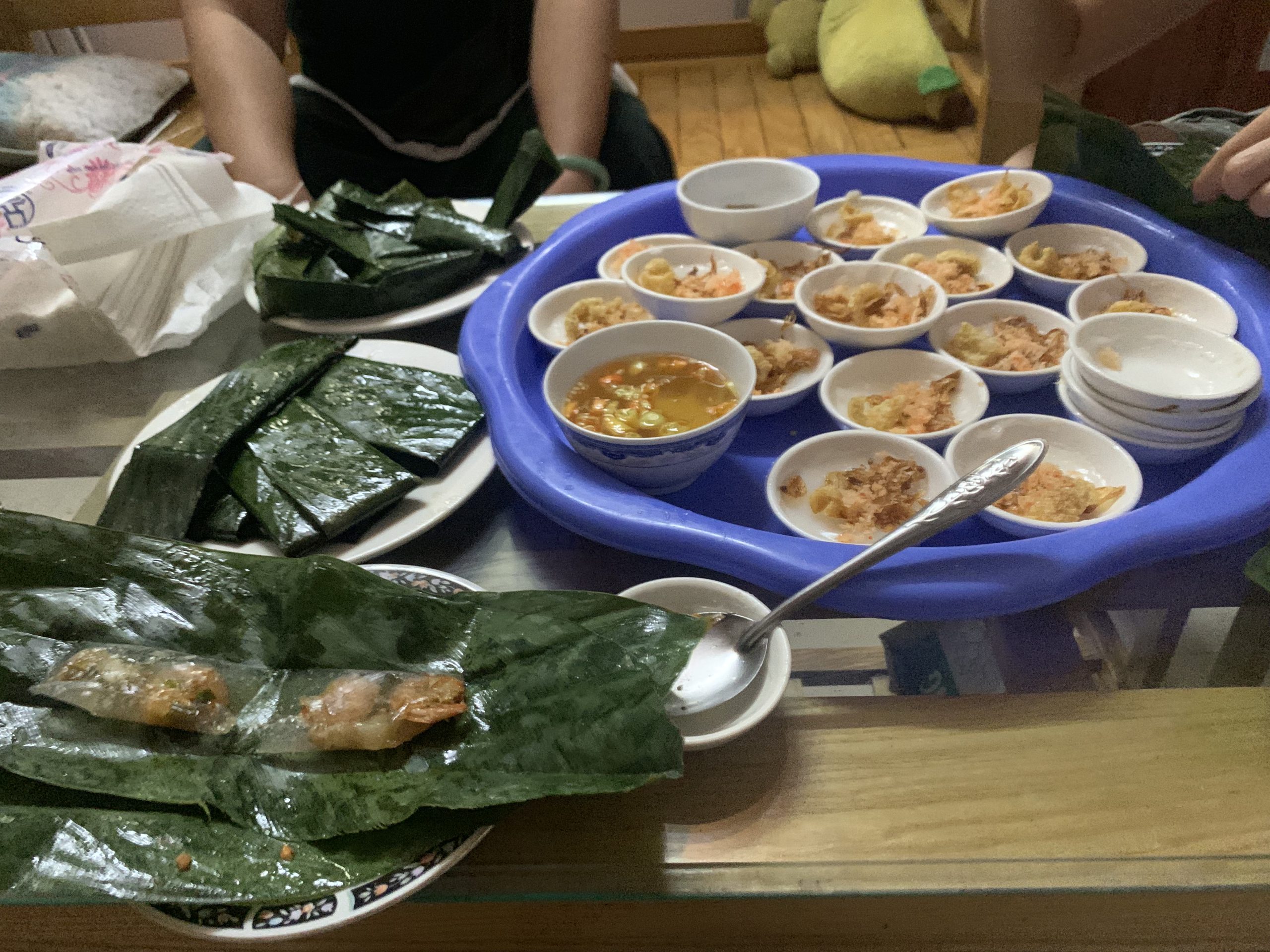
Bánh bèo and Bánh bột lọc are bite sized, savory Vietnamese dishes from the city in Vietnam that my father is from, Huế. Bánh bèo is uniquely served on small, individual dishes, and my father always told me that stacking the dishes became a competition of who could eat the most. Bánh bột lọc is wrapped, steamed, and served in banana leaves, and perhaps part of how much I love this dish is because of the element of surprise. When we eat these dishes, my father always reminds me to drown my bites in the slightly sweet and spicy Vietnamese dipping sauce served on the side, Nước chấm. I’ve been to many Vietnamese restaurants in New York and these specific dishes are rare to find. Ever since I was young, my family would often make an entire trip to Philadelphia to visit an authentic Vietnamese bakery called Ba Le that has a vast selection of traditional Vietnamese desserts, sauces, and dishes. For gatherings, my family sometimes orders large platters of Bánh bèo and Bánh bột lọc from a local family in Queens. When I visited my family in Huế in the summer of 2023, I was so excited to try Bánh bèo and Bánh bột lọc from my aunt’s neighbors. It was served exactly how I’d always eaten it, but it was even more special now that I was enjoying it with my family in Vietnam. Whenever I think of the taste of Vietnam, the first thing I think of are these two special dishes.
Gardening
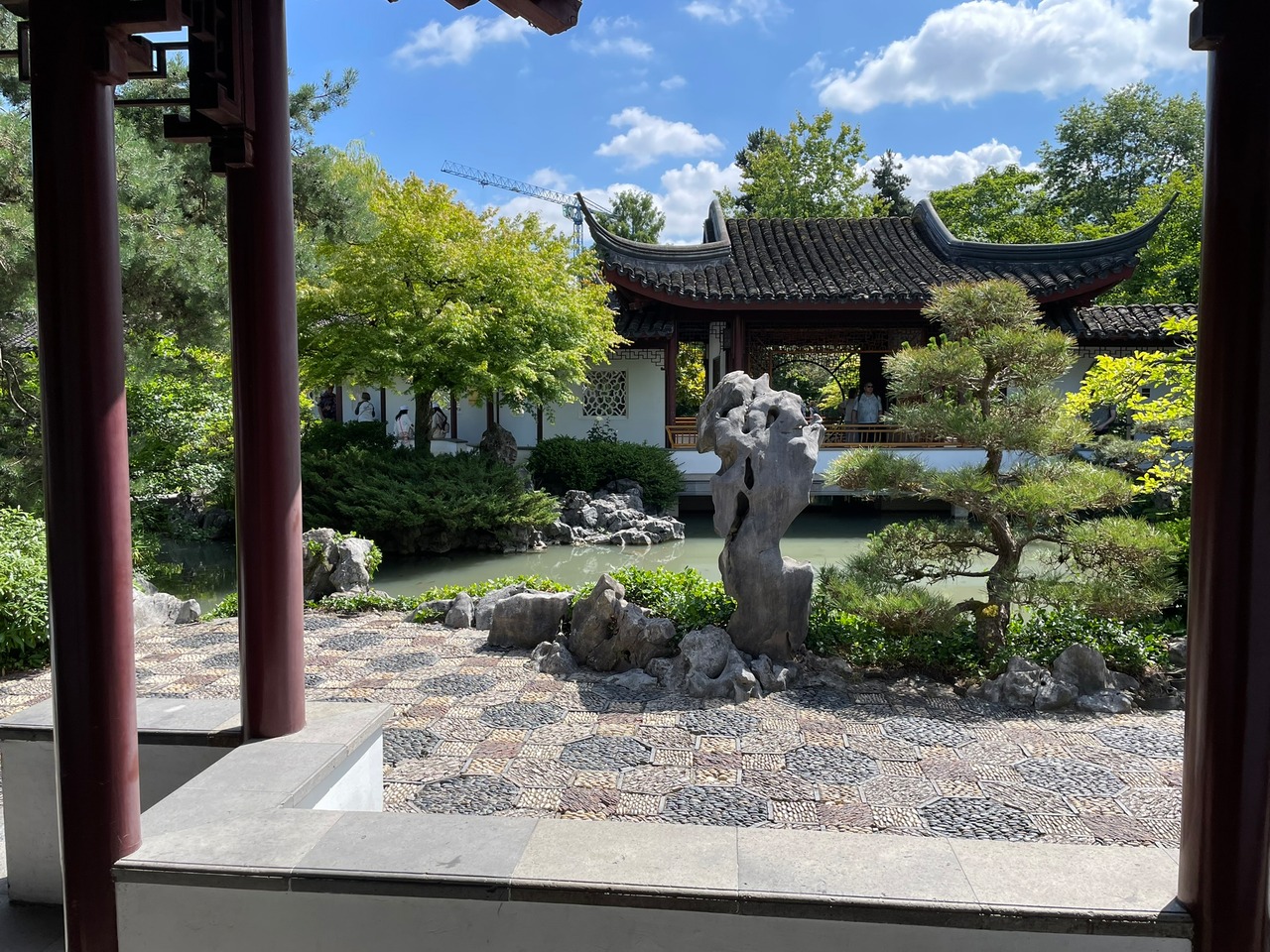
Gardening was never seen as just a hobby on my mother’s side of the family. It was an art, a skill, and a way of understanding feng shui. In direct translation, feng shui means “wind-water,” and it reflects the flow of energy within a home and family. My grandparents, like many people of their generation, believed that when plants grew healthy and strong, it was a sign that the family carried positive energy, along with wealth, prosperity, and good health. To them, a garden was never just decoration. It was a reflection of the people who cared for it and the life growing around it.
Some of my earliest memories are of visiting my grandparents and seeing their garden. I remember the bright leaves shining under the sun, the sharp tang of lemons in the air, and the Golden Nanmu tree that always stood out to me as something rare and almost sacred. Every time I returned, everything seemed bigger, stronger, and more alive. As a child, I used to wonder if my grandpa had some kind of secret potion that made everything grow so beautifully. But there was no secret. It was just patience, routine, and care. He watered each plant carefully, paid attention to every leaf, and nurtured the garden the way someone would care for a child. That was what made it so beautiful. It was not magic.
That is why gardening means so much more to me now. It is not just about plants. It is about what those plants represent. Each tree, fruit, and flower carries a history of where my family came from and what they believed in. My grandparents brought with them not only traditions, but also a way of seeing the world, one where care and growth were deeply connected. They believed that what you nurture will eventually flourish, whether that is a garden, a home, or a family.
My mother inherited that same skill and artistry from her parents and brought it with her to the United States in 2004. Even after moving to a new country, she held onto this part of home. Over time, as she became busy raising my sisters and me, gardening blended into daily life rather than standing apart from it. It became something quieter but still deeply present, woven into the way she cared for our family. My uncles also have gardens of their own, which makes this tradition feel even larger than one person. It stretches across generations. In many ways, my grandparents planted more than seeds when they came here. They planted values, habits, and traditions into foreign soil, trusting that future generations would continue to grow from them.
That is why gardening is my object. It is physical, but it is also symbolic. It represents patience, care, family history, and the idea that growth takes time. It connects me to my grandparents, to my mother, and to a cultural belief system that sees nature as deeply tied to the energy of a home. When I think about gardening, I do not just think about leaves or fruit. I think about inheritance. I think about what gets passed down without always being spoken. I think about how something as ordinary as watering a plant can hold history, love, and intention.
Gardening matters to me; it reflects growth that comes from being nurtured, protected, and given time. In that way, gardening tells the story of my family. It tells the story of how my grandparents carried their beliefs into a new land, how my mother continued them, and how I now see myself as part of that same living history. Gardening is not just a hobby. It is a tradition, a legacy, and a reflection of the roots that continue to ground me.